ABU DHABI — The Environment Agency – Abu Dhabi (EAD) has announced a significant expansion of its desert vegetation project, deploying a high-tech arsenal of artificial intelligence and drones to safeguard the emirate’s terrestrial ecosystems. The initiative marks a pivot toward "data-driven conservation," utilizing autonomous technology to map, monitor, and restore vast stretches of desert land with unprecedented precision.
As the global aviation and finance sectors in the UAE navigate geopolitical and economic shifts, the EAD is focused on a different kind of long-term stability: environmental resilience. By scaling its use of unmanned aerial vehicles (UAVs), the agency is tackling the dual threats of climate change and human impact, including overgrazing and off-road vehicle use.
The Digital Guardian: AI and Spectral Imaging
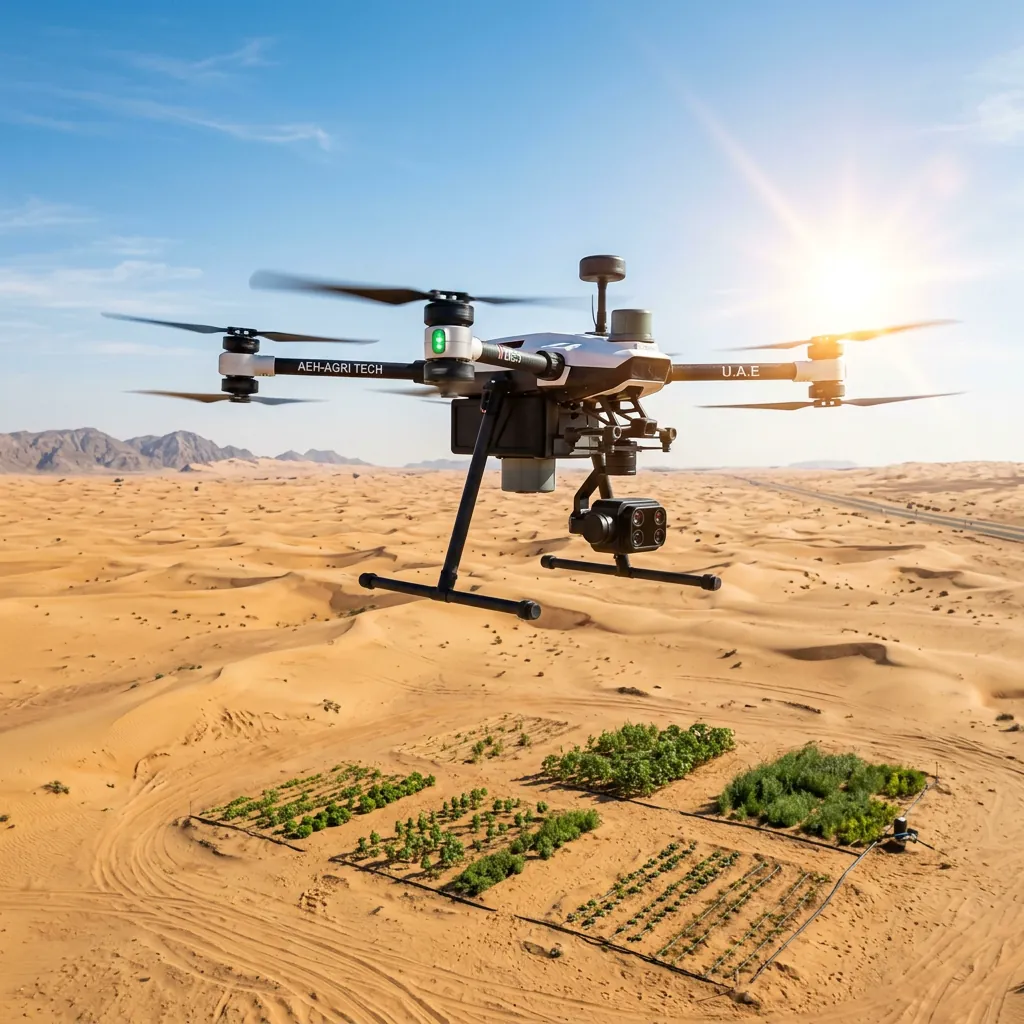
The project’s expansion builds on years of habitat monitoring, now supercharged by advanced AI. Specialized teams are using drones to collect detailed biological indicators of native plant species across expansive terrestrial habitats.
Key Technological Breakthroughs:
- Precision Mapping: Integrating spectral signatures to track subtle changes in plant health invisible to the human eye.
- 3D Documentation: Using high-resolution imagery to analyze wildlife distribution and species interaction with the flora.
- Geospatial Reporting: An integrated "smart platform" that allows for real-time reporting and statistical analysis, facilitating faster policy decisions.
Efficiency by the Numbers
The transition from traditional manual fieldwork to an AI-drone model has yielded dramatic results for the emirate’s environmental budget and operational speed.
| Metric | Improvement with AI & Drones |
|---|---|
| Operational Costs | 90% Reduction |
| Administrative Burden | 90% Reduction |
| Accessibility | Access to previously unreachable remote terrain |
| Environmental Footprint | Significant reduction in field vehicle emissions |
Aerial Seeding: The Future of Reforestation
Beyond just monitoring, the EAD is moving into active restoration. The agency has begun testing drones designed to disperse native seeds in selected areas. Unlike traditional agriculture, this method relies on natural regeneration; drones identify "optimal planting zones" based on soil quality and projected rainfall patterns.
Specialized autonomous systems, some capable of carrying up to 70kg of seeds, are being monitored annually to measure germination success rates. This "Nature X" approach—a collaborative effort between the EAD and the Advanced Technology Research Council (ATRC)—is already showing success in mangrove restoration and is now being aggressively applied to the arid interior.
A Sustainable Vision
As Abu Dhabi looks toward 2030, the integration of these smart technologies is no longer a luxury but a necessity. By building a comprehensive environmental database, the EAD is ensuring that the emirate’s natural heritage remains protected against the pressures of modern expansion.
As Secretary-General Dr. Shaikha Salem Al Dhaheri notes, the project is a "major step forward," moving conservation out of siloed pilots and into a coordinated, technology-first defense of the UAE’s native biodiversity.