A Partnership That Spans Five Decades
When the Abu Dhabi Fund for Development (ADFD) first extended development support to Jordan back in 1974, neither party could have imagined it would grow into a AED 9.4 billion portfolio spanning hospitals, solar farms, grain silos, dams, and export credit lines.
That milestone has now been crossed. ADFD's cumulative investment in the Hashemite Kingdom of Jordan has exceeded AED 9.4 billion (approximately USD 2.56 billion), making it one of the most substantial bilateral development partnerships in the Arab world.
Where the Money Went: Capital Breakdown
| Investment Track | Amount |
|---|---|
| Total Historical Development Portfolio | AED 9.40 Billion |
| Gulf Development Programme Contribution | AED 4.60 Billion |
| Funds Disbursed by End of 2016 | AED 4.459 Billion |
The Gulf Development Programme alone contributed AED 4.6 billion, with the vast majority already disbursed into Jordan's education, water, transport, and energy sectors by the end of 2016.
The Four Projects That Tell the Story
1. A Virtual Hospital Powered by AI
In 2024, using a USD 100 million UAE grant tied to Jordan's Economic Modernisation Programme, the Jordan Digital Health Centre went live. Built in partnership with AI firm Presight, the virtual hospital connects hospitals and clinics through a centralized digital health records platform.
The first phase alone brought five regional hospitals and three comprehensive health centres onto a single system, cutting diagnosis wait times and extending specialist care to rural communities that previously had limited access.
2. Grain Silos That Could Feed a Nation Under Stress
Jordan is not food self-sufficient, which makes strategic storage a national security issue. ADFD allocated AED 258.7 million (USD 70.5 million) to expand grain silo capacity at two key locations:
- Al Juwaideh silos: expanded by 120,000 tonnes to a total capacity of 250,000 tonnes
- Aqaba silos: expanded by 100,000 tonnes to a total capacity of 200,000 tonnes
Together, these upgrades significantly strengthen Jordan's ability to buffer against global food supply shocks.
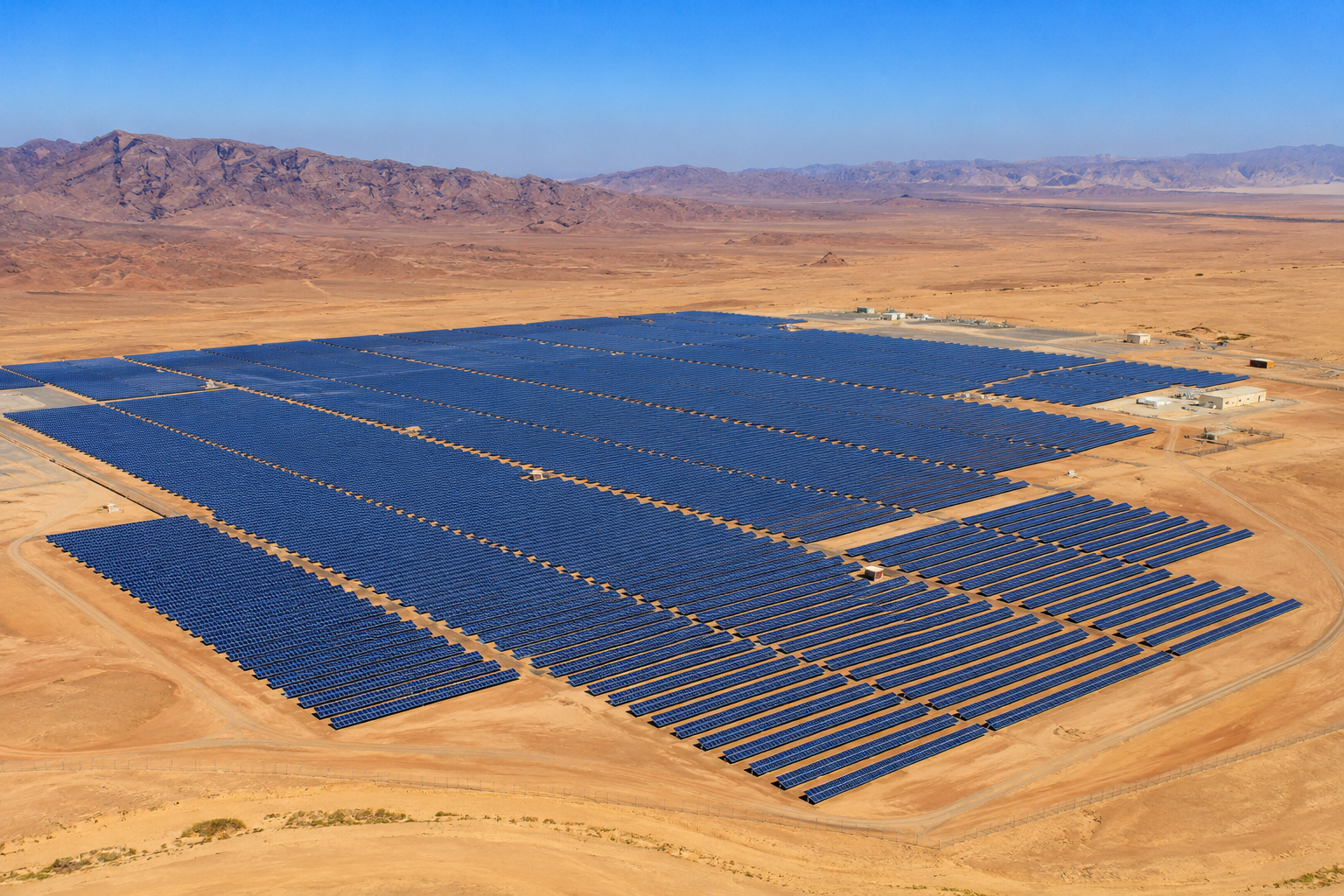
3. A 103MW Solar Complex in the Jordanian Desert
In 2013, an AED 551 million grant financed the Sheikh Zayed Solar Power Complex in Quweira, southern Jordan. The facility generates 103 megawatts of clean solar electricity, enough to power more than 50,000 homes. Beyond the environmental benefit, the plant reduces Jordan's dependence on imported fossil fuels, a persistent drain on the national budget.
4. A Dam That Protects an Agricultural Valley
The Kufranja Dam is a critical climate resilience project for one of Jordan's most productive agricultural areas:
- Structure: 80-metre high rock-fill dam
- Total water storage capacity: 7 million cubic meters
- Agricultural water allocation: 4 million cubic meters, irrigating an additional 6,000 dunums of farmland
- Municipal supply: approximately 3 million cubic meters of clean drinking water annually to the Ajloun Governorate
Trade Finance: Opening the Door for UAE Exporters
Beyond physical infrastructure, ADFD's export arm, the Abu Dhabi Exports Office (ADEX), has signed a trade financing agreement with Jordan's Capital Bank. The deal establishes a revolving credit facility of AED 73.4 million (USD 20 million), giving UAE exporters access to credit lines and risk guarantees for entering or growing in the Jordanian market.
More Than Aid: A Model for Arab Development
Mohammed Saif Al Suwaidi, Director-General of ADFD, summed up the spirit of the partnership: "The UAE and Jordan share deep-rooted historical ties founded on fraternity, shared visions, and long-standing cooperation."
What makes the ADFD model stand out is the emphasis on long-term capital deployment rather than emergency transfers. Each project is designed to build something that generates ongoing value for Jordanians, whether that is cheaper electricity, a safer food buffer, or faster healthcare. As both nations move through 2026, this framework continues to grow.