Running a low-cost airline profitably is hard at the best of times. Doing it when airspace closures compress your capacity and reroute your network mid-quarter is something else entirely. Air Arabia's Q1 2026 results: a Dh278 million net profit on Dh1.8 billion in turnover: tell the story of an airline that absorbed a significant external shock without losing its operational footing.
Yes, the 22% year-on-year decline in net profit is real and material. But the context around it matters enormously for anyone assessing Air Arabia's long-term trajectory.
The Numbers, in Context
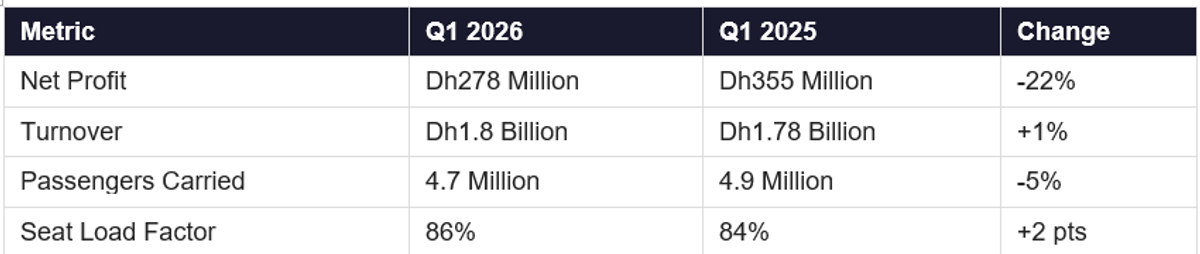
The seat load factor improvement is the number to watch. Despite carrying 200,000 fewer passengers than the same period last year, a direct result of reduced capacity during airspace closures, Air Arabia filled a higher percentage of available seats. That indicates disciplined capacity management and sustained demand for its routes, not structural weakness.
What Caused the Profit Decline?
The primary driver was a regional conflict that triggered airspace closures, particularly impacting operations in March. For a carrier that operates heavily across Middle Eastern, North African, and South Asian routes, airspace restrictions don't just create inconvenience: they force capacity reductions, increase fuel burn through rerouting, and compress revenue in ways that are largely outside management's control.
Sheikh Abdullah Bin Mohammad Al Thani, Chairman of Air Arabia, acknowledged the difficulty while framing the outcome as a demonstration of the carrier's resilience: "Our ability to optimise capacity and maintain operational continuity enabled us to effectively manage the impact during this critical period."
That optimisation, reflected in the improved load factor, is what kept the airline profitable rather than merely breaking even.
Fleet and Network: Expansion Continues
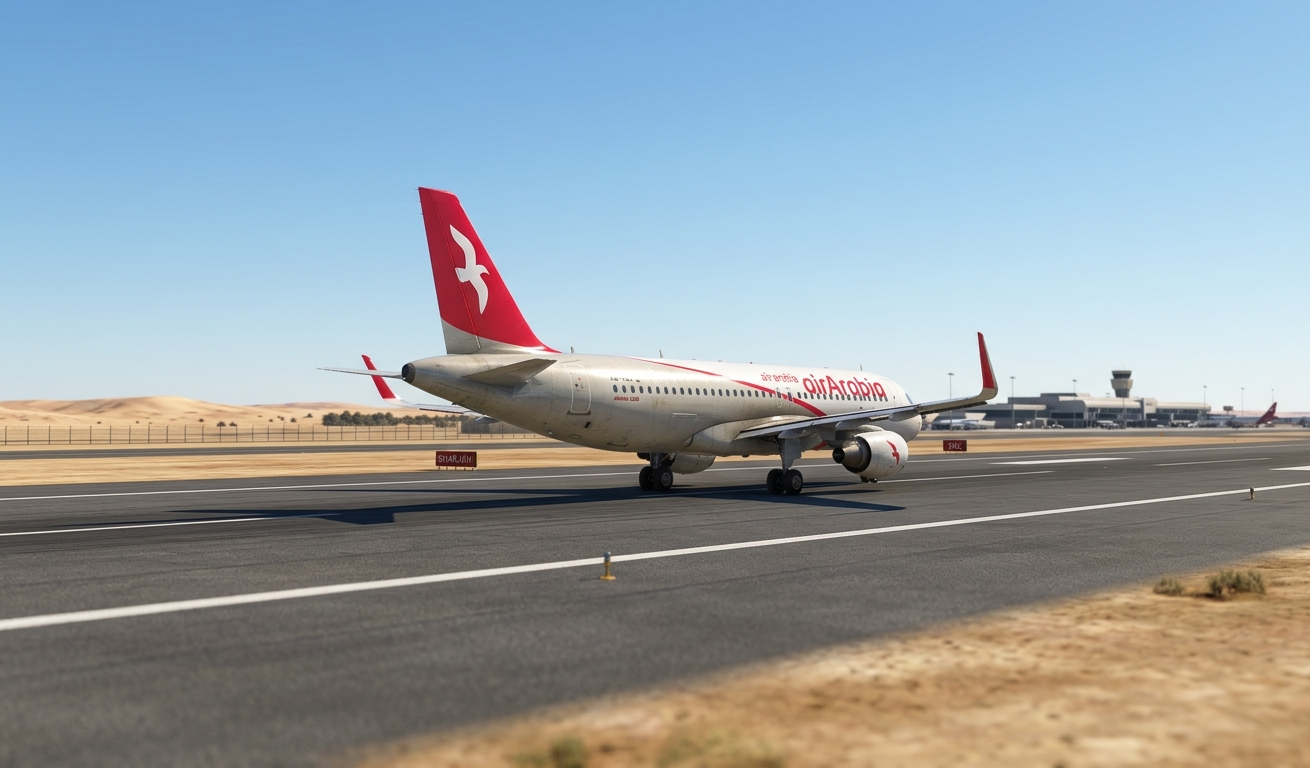
Despite the turbulence, Air Arabia's structural growth story remains intact. The carrier operated a fleet of 90 Airbus A320 and A321 aircraft during Q1, spanning strategic hubs in the UAE, Morocco, Egypt, and Pakistan. Additional aircraft are scheduled for delivery throughout 2026 under its existing Airbus order book.
This multi-hub model is central to Air Arabia's competitive positioning. Unlike single-hub carriers, it distributes operational risk across multiple geographies: a structure that proved its worth when regional disruptions hit one part of the network harder than others.
Beyond the P&L: ESG and Recognition
The quarter also delivered two milestones worth noting for institutional stakeholders:
- ESG Assurance: Air Arabia obtained a Limited Assurance Statement on its 2025 ESG Report under the ISAE 3000 framework: a meaningful step toward the kind of third-party verified sustainability reporting that institutional investors and corporate travel managers increasingly require.
- Forbes Recognition: The airline was named among Forbes Middle East's Top 100 Most Valuable Companies 2026, reinforcing its standing as one of the region's most financially durable aviation brands.
Looking Ahead
The airline's forward outlook is measured but confident. Fuel price volatility, inflationary pressures on operational costs, and global supply chain challenges remain live risks. But Air Arabia enters Q2 2026 with a strong load factor baseline, an expanding fleet, and a multi-hub model that provides the geographic flexibility to manage whatever the region throws at it next.
For B2B stakeholders: whether corporate travel managers evaluating airline partnerships, investors tracking regional aviation, or logistics operators monitoring cargo capacity, Air Arabia's Q1 result is a reminder that resilience, not just growth, is what separates durable carriers from the rest.