Ten quarters. Ten records. No signs of slowing down.
Binghatti Holding has become one of Dubai's most consistently performing developers over the past two and a half years, and Q1 2026 continued that streak without hesitation. Net profit: Dh1.43 billion. Revenue: Dh4.39 billion. That's a 73% and 52% jump respectively compared to Q1 2025.
The Q1 2026 Scorecard
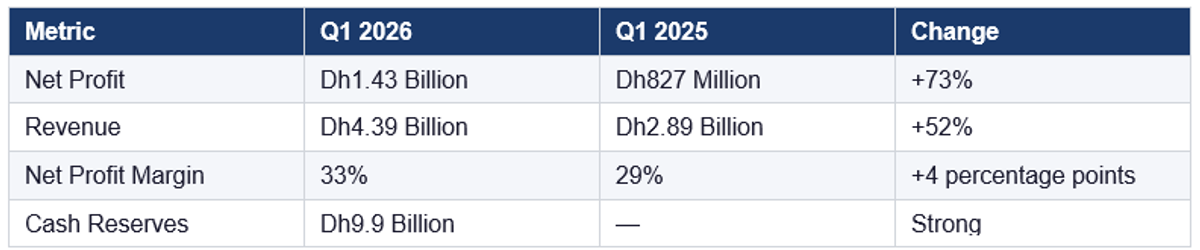
The margin improvement, from 29% to 33%, is arguably the most telling figure. It suggests Binghatti is not just growing fast; it is growing efficiently.
Sales, Launches, and the Backlog
Between January and March 2026, Binghatti sold over 4,000 residential units, generating Dh5.88 billion in sales in just one quarter. The company launched five new projects valued at Dh8.58 billion, adding 4,696 units to an already bulging pipeline.
- Total development backlog: Dh52 billion
- Sales backlog: Dh16 billion
- Revenue backlog: Dh18 billion
For institutional investors and analyst communities tracking Dubai's real estate cycle, this backlog provides exceptional earnings visibility well into 2027 and beyond.
Branded Luxury: The Differentiator
What sets Binghatti apart from many volume developers is its premium positioning through branded residential collaborations. The Mercedes-Benz Places and Bugatti Residences in Business Bay and Downtown Dubai have attracted a genuinely global buyer base: high-net-worth individuals and institutional investors who treat Dubai property as a portfolio asset.
This branded luxury strategy is central to how Binghatti commands pricing premiums in a market with no shortage of new supply. Total assets have now reached Dh32.87 billion.
What Leadership Is Saying
Muhammad Binghatti, Chairman, attributed the results to a vertically integrated business model. Binghatti controls its own construction operations, which tightens timelines, improves quality control, and protects margins.
CFO Shehzad Janab pointed to the capital markets side: Binghatti's $500 million Sukuk (the longest-tenor ever issued by a private UAE developer) was oversubscribed 4.4 times. That level of international demand for a developer's debt instrument is not routine. It reflects genuine institutional confidence.