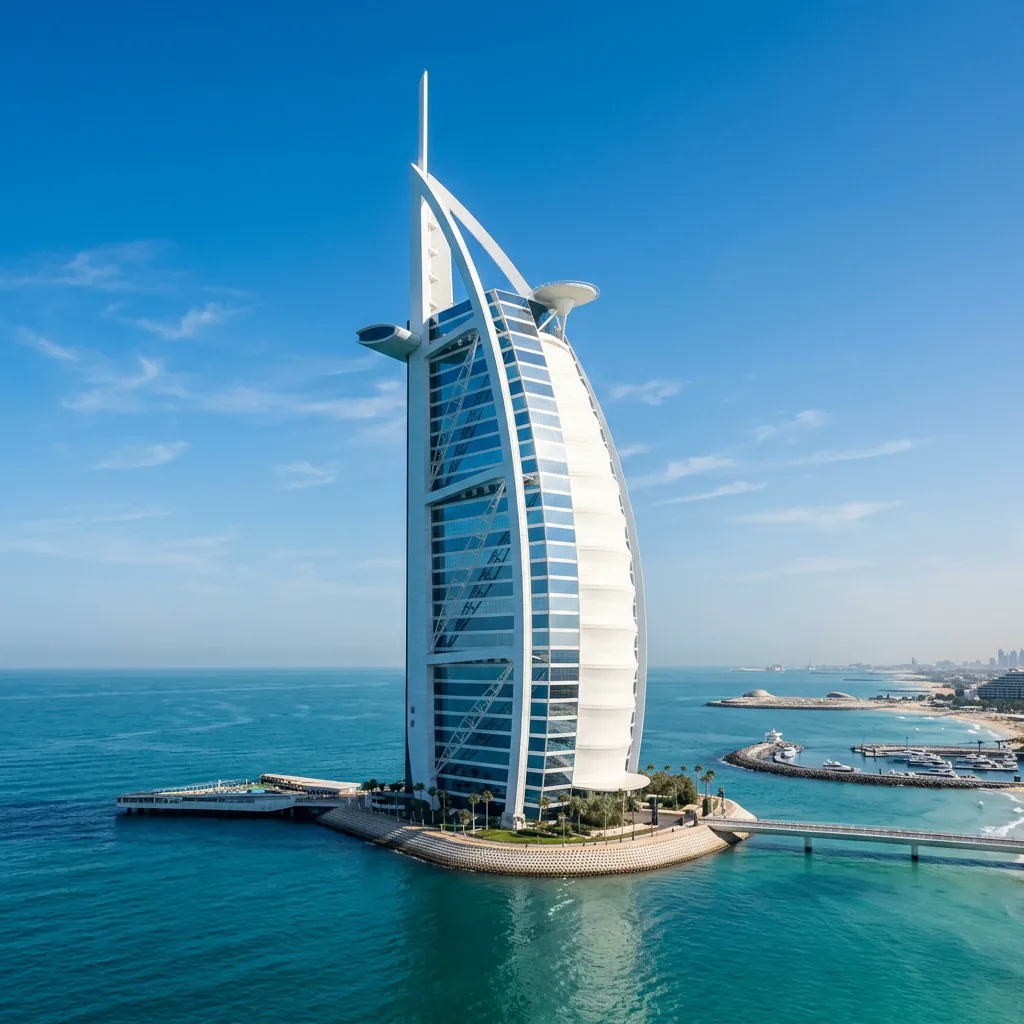
DUBAI — For over a quarter-century, the sail-shaped silhouette of the Jumeirah Burj Al Arab has done more than just punctuate the Dubai skyline; it has served as the global shorthand for "luxury." Now, for the first time since its 1999 debut, the world’s most famous hotel is closing its doors for a comprehensive, 18-month restoration.
The Jumeirah Group, a subsidiary of Dubai Holding, confirmed that the property will undergo a phased refurbishment to preserve the landmark for future generations. Led by acclaimed French interior architect Tristan Auer—famed for his work on the Hôtel de Crillon in Paris—the project aims to honor the hotel's "heritage" status while modernizing its legendary opulence.
More Than a Hotel: A National Symbol
Designed by British architect Tom Wright to be Dubai’s equivalent of the Sydney Opera House, the Burj Al Arab was built on a man-made island 280 meters offshore. Rising 321 meters high, its "dhow sail" design instantly transformed Dubai from a transit hub into a primary destination for the global elite.
“Jumeirah Burj Al Arab is far more than an architectural landmark; it is a symbol of ambition, craftsmanship, and enduring excellence,” said Thomas B. Meier, CEO of Jumeirah.
The Anatomy of "Seven-Star" Luxury
While official hotel rankings stop at five stars, the Burj Al Arab’s sheer extravagance led journalists to coin it the world’s only “seven-star hotel.” The interior, originally envisioned by Khuan Chew, was built around the elements of earth, air, fire, and water.
The Icon by the Numbers:
- Gold Leaf: Approximately 1,790 square meters of 24-carat gold decorate the interiors.
- The Atrium: At over 180 meters, it remains one of the tallest hotel atriums in the world.
- The Suites: 198 duplex suites (no standard rooms exist), each featuring floor-to-ceiling ocean views and 24-hour private butler service.
- Rare Materials: Custom marble sourced exclusively from Italy and Brazil.
A Stage for the Extraordinary
The Burj Al Arab’s fame was cemented not just by its rooms, but by its helipad, which became a global stage for legendary publicity stunts. It has hosted:
- Tiger Woods teeing off into the Arabian Gulf (2004).
- Roger Federer and Andre Agassi playing a surreal tennis match 200 meters in the air (2005).
- High-octane Formula One stunts and boxing matches.
What to Expect During the Hiatus
The restoration will see the temporary closure of the hotel and its nine world-renowned dining venues, including the sky-high Al Muntaha and the "underwater" Al Mahara.
Jumeirah has assured loyal patrons that they will be assisted with alternative reservations across its other luxury properties in Dubai during the 18-month window. As the "diamond of the desert" goes under the proverbial knife, the industry watches closely. This isn't just a renovation of a building; it is the refreshing of Brand Dubai itself.
The goal is clear: to ensure that when the "sail" unfurls again in late 2027, it remains the undisputed benchmark for luxury hospitality in an increasingly competitive global market.