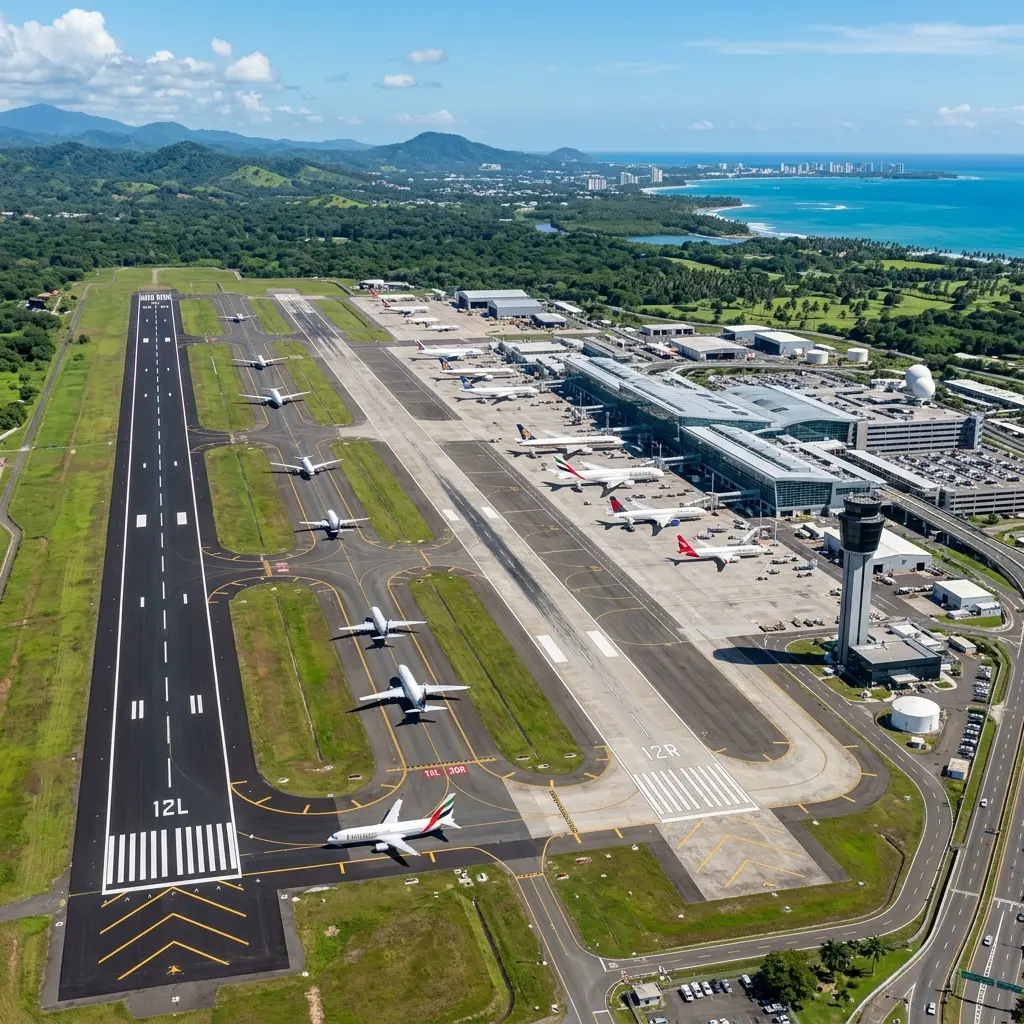
The transformation of Clark International Airport (CRK) into a premier global aviation and logistics powerhouse has reached a critical takeoff point. The state-run Bases Conversion and Development Authority (BCDA) has officially awarded the detailed engineering design contract for a second runway, a move set to double the hub's operational resilience.
The ₱206.9-million contract was granted to a joint venture between Schema Konsult Inc. and South Korea’s Yooshin Engineering Corp. This milestone marks the formal beginning of the design phase for a project that has long been viewed as the key to unlocking the region's economic potential. This parallels major aviation shifts seen in the Middle East where redundancy and capacity are paramount.
Redundancy as a Catalyst for Growth
For major international airlines, a single runway is often a bottleneck. The addition of a second landing strip is not just about volume; it is about operational redundancy. Currently, any maintenance or unexpected disruption on the primary runway can paralyze operations.
A second strip ensures that Clark can remain open 24/7, a mandatory requirement for many elite global carriers and a massive step toward Clark becoming a primary alternative to the perennially congested Ninoy Aquino International Airport (NAIA).
Clark’s Aviation Ascent
The expansion is a direct response to a surge in demand. Since the opening of its state-of-the-art 110,000 m² terminal in 2022, CRK has seen a steady climb in both human and cargo traffic. Key metrics include:
- 2025 Passenger Traffic: 2.75 million.
- Current Terminal Capacity: 8 million passengers per year.
- Runway Operational Target: Q4 2029.
A Global Logistics Nerve Center
Beyond passenger travel, the second runway is the backbone of the Luzon Economic Corridor (LEC). Global logistics giants like FedEx and UPS are already scaling their footprints within the 44-km² Clark Freeport Zone. Confidence in the region is at an all-time high, evidenced by plans for a $480 million maintenance and cargo hub currently in development.
To support this, the Department of Transportation is coordinating broader airside upgrades, including expanded taxiways and aprons to increase hourly flight movements. By creating a high-tech "aviation nerve center," the region is positioning itself as a formidable competitor in the international market.