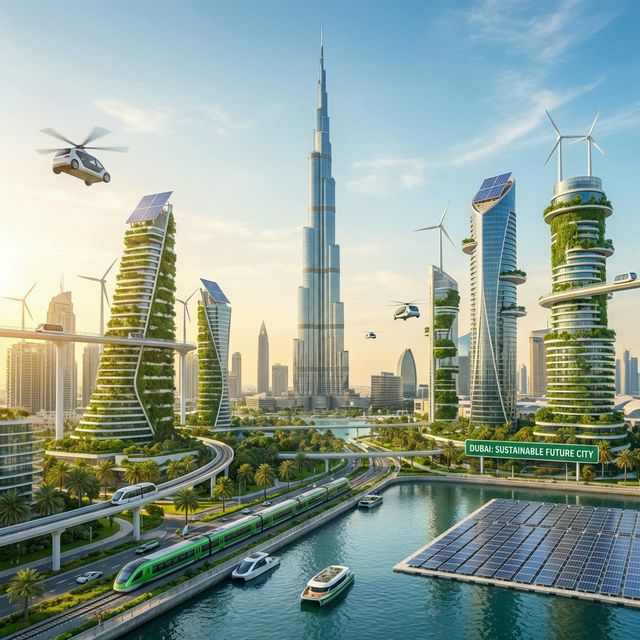
Dubai, UAE – Building on the legacy of hosting COP28, Dubai's commitment to sustainability translated into tangible business opportunities in 2025. The CleanTech sector, once considered a niche market in the region, experienced explosive growth as startups rose to the challenge of building a greener, more sustainable future.
This growth wasn't merely ideological; it was backed by significant government incentives, corporate ESG commitments, and a growing realization among venture capitalists that climate technology represents massive financial upside.
Key Areas of CleanTech Innovation
1. Next-Generation Solar Solutions
While the UAE has long invested in macro-level solar infrastructure, 2025 saw startups focusing on decentralized and integrated solar tech. Innovations included hyper-efficient transparent solar panels for skyscraper windows and intelligent micro-grid management systems for residential communities, allowing consumers to efficiently trade excess energy.
2. Water Scarcity and Agritech
Addressing the region's fundamental challenge of water scarcity, startups made significant strides. Companies utilizing AI to optimize desalination processes, atmospheric water generation technologies, and advanced hydroponic systems capable of producing high yields with minimal water usage saw unprecedented adoption rates across the UAE.
3. Sustainable Mobility and Logistics
The transition away from fossil-fueled transport accelerated. Beyond electric vehicle (EV) charging infrastructure startups, 2025 witnessed the rise of sustainable 'last-mile' delivery solutions using zero-emission fleets and AI-optimized routing to minimize carbon footprints in the logistics sector.
4. Circular Economy Platforms
Startups making the circular economy a reality gained serious traction. Platforms facilitating B2B industrial waste exchange, advanced recycling technologies for complex plastics, and tech-enabled food waste reduction programs for the hospitality industry secured substantial funding.
The Government Catalyst
The rapid expansion of the CleanTech ecosystem in 2025 was heavily supported by government initiatives. Free zones offered subsidized licenses and specific incubation programs for 'green' businesses. Furthermore, government-backed venture funds actively participated in early-stage funding rounds for startups demonstrating high-impact environmental solutions.
Looking Forward
As 2025 drew to a close, the narrative around CleanTech in Dubai shifted from 'alternative' to 'essential.' The startups that laid the groundwork over the past year are perfectly positioned to scale their technologies globally, proving that rapid economic development and environmental stewardship can go hand-in-hand.