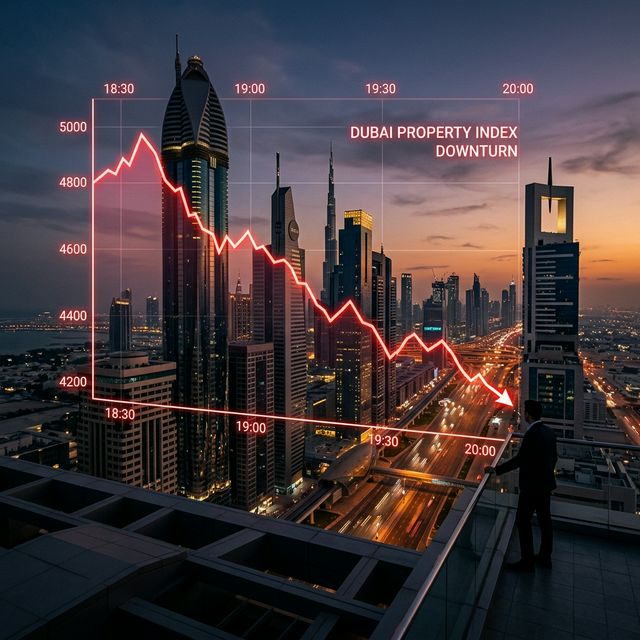
DUBAI — Housing sales in Dubai have dropped 25% since the escalation of tensions between Iran, the US, and Israel late last month, while the Dubai Financial Market Real Estate Index has fallen by more than 25% over the same period, Anadolu reports.
The ongoing regional conflict has slowed activity across key Gulf sectors, including energy, trade, logistics, finance, and tourism. However, in the first 20 days of the war, the scale of economic disruption became increasingly clear, with Dubai’s highly lucrative real estate market emerging as one of the hardest-hit sectors.
A Slower Pace for International Buyers
Long seen as a global hub for tourism and property investment, Dubai has consistently attracted international buyers with strong returns and tax advantages. However, the widening conflict—beginning on February 28 with US and Israeli strikes on Iran, followed by Iranian retaliatory attacks—has rapidly dampened housing demand.
According to DXB Interact data, sales fell to 6,129 transactions between March 2 and 16, down from 8,199 in the preceding February 16 to March 1 period — resulting in a stark 25% decline. Transaction volumes mirrored this drop, sliding 25.7% from $7.55 billion to $5.61 billion.
Market Indicies Feel the Squeeze
The public markets are reflecting the slowdown on the ground. The Dubai Financial Market Real Estate Index, which tracks listed property firms and massive developers across the emirate, has lost more than a quarter of its value in the past month as investor sentiment sours.
Experts note that a prolonged conflict could severely erode international investment and put further pressure on the sector, which has been a powerful engine of economic diversification for the UAE. The broader travel and logistics industry has also felt the pinch; recently, regional airlines including FlyArystan announced the temporary suspension of select flights, citing instability in the Middle East and restricted airspace.