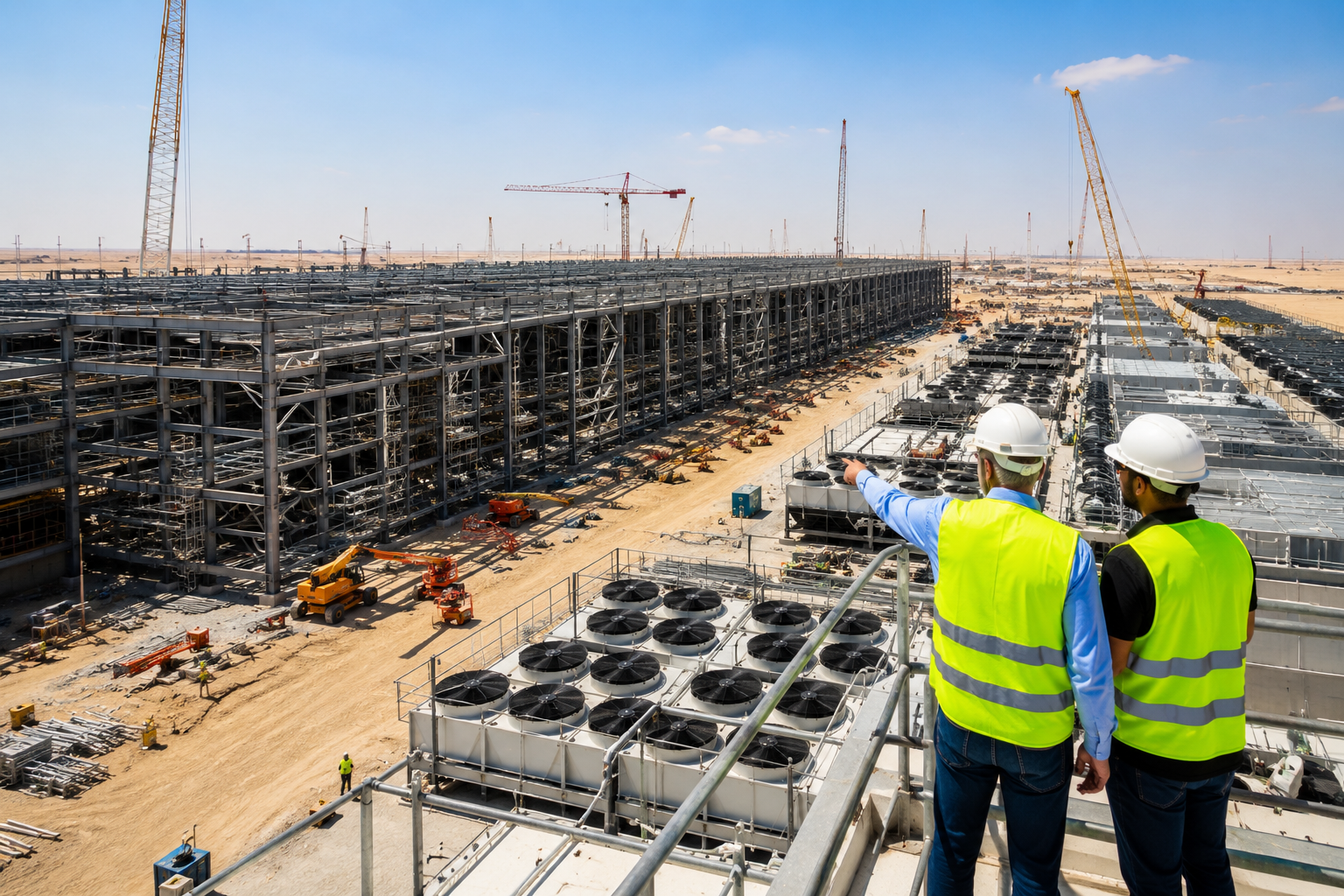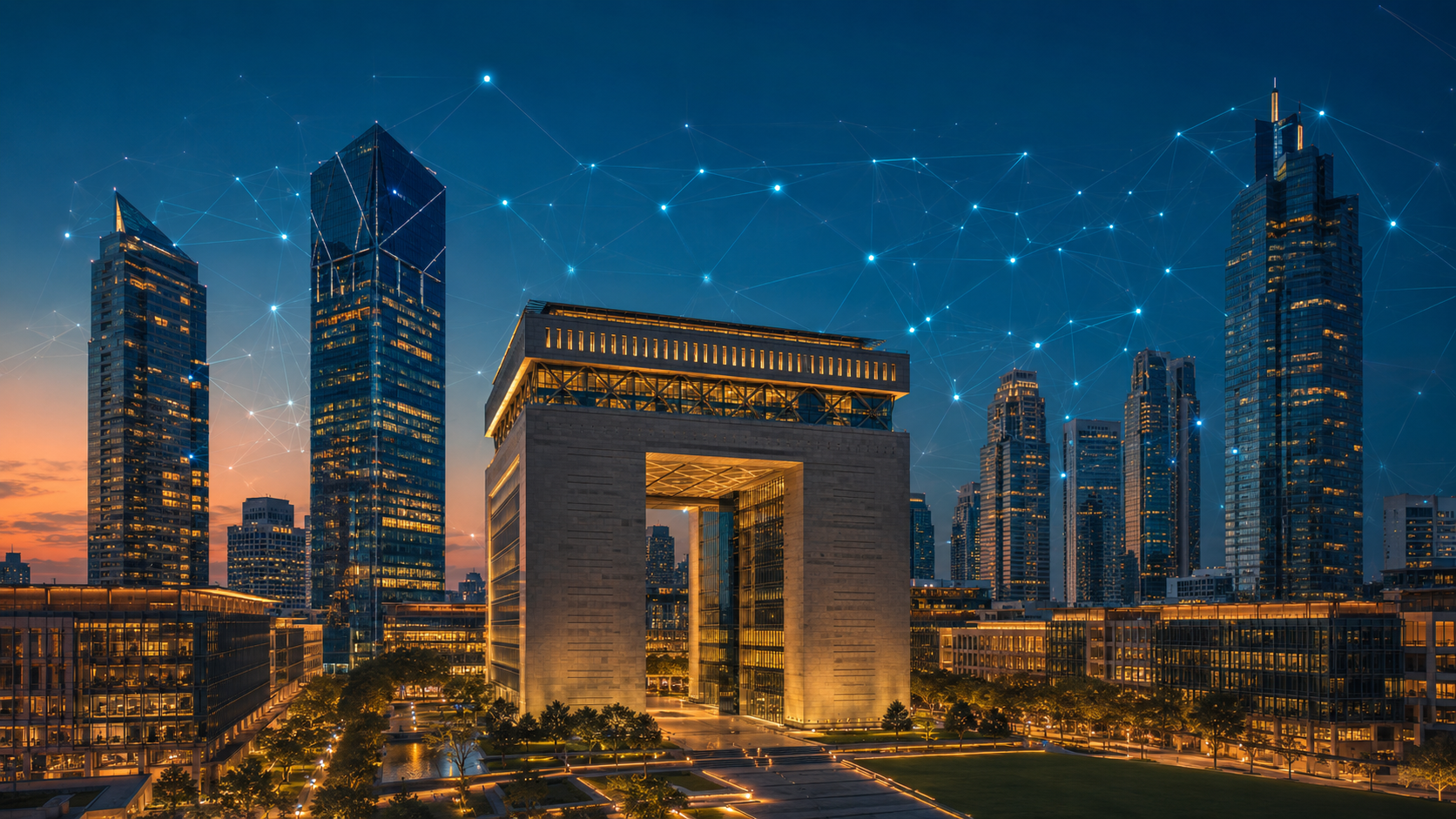
A Financial Centre Rebuilding Itself Around AI
Most financial hubs are still figuring out how to bolt AI onto what they already have. DIFC just decided to skip that step entirely. On April 21, 2026, the Dubai International Financial Centre announced it will become the world's first AI native financial centre, meaning artificial intelligence gets built into the legal system, the regulatory system, business operations, talent programmes and even the physical district itself, rather than sitting on top of them as a tool.
The headline change is a legal one. For the first time anywhere, an AI agent will be able to register as a recognised participant in a financial system, standing alongside banks and asset managers rather than existing only as software inside one. That is a genuinely new category, and it is worth slowing down to see exactly what is shifting.
What Actually Changes for AI Agents
Today, across virtually every financial centre on earth, the relationship between AI and regulation looks the same. Here is how DIFC is proposing to flip it.
| How It Works Today | How DIFC Plans to Run It | |
|---|---|---|
| Who registers | A financial institution registers and gets licensed | AI agents can be registered as recognised participants in their own right |
| Who acts | Humans act as the authorised representatives | AI agents can operate within the regulatory perimeter directly |
| Role of AI | AI is a tool used inside the firm | AI can interact with the system itself, not just represent a firm |
The Numbers Behind the Ambition
DIFC's Native AI Programme, at a glance
- $350 million committed to the initiative
- $3.5 billion in projected economic value (roughly Dh12.9 billion)
- 25,000 jobs expected to be created
- 500 AI powered companies targeted on DIFC's campus by 2028
Arif Amiri, CEO of DIFC Authority, framed it as a governance play as much as an economic one, describing the goal as setting "a global benchmark for AI governance and responsible innovation", according to the centre's official statement.
Four Pillars Doing the Heavy Lifting
DIFC has organised the whole push into four connected workstreams. Each one is designed to reinforce the others, so the legal changes actually have somewhere to plug in.
1. Legal and regulatory frameworks
- Formal recognition of humans, AI agents and robotics as participants in financial activity
- A new AI Agent Registration System
- Real time compliance monitoring and AI enabled licensing
- Frameworks covering liability, disputes and trusted data exchange
- Cross border recognition mechanisms that other jurisdictions could plug into
2. Business operations
AI gets embedded across the Dubai Financial Services Authority (DFSA), DIFC Courts and enterprise workflows across the centre. Part of the plan includes a sovereign AI utility, essentially shared large language model infrastructure that regulated firms, including banks such as HSBC and Standard Chartered, can plug into rather than building their own from scratch.
3. Talent development
The DIFC AI Campus is expanding, with executive education, technical certifications and human AI collaboration training built around it. Partners named so far include MBZUAI (Mohamed bin Zayed University of Artificial Intelligence) and Microsoft. This lines up with wider concern in the market that skills are not keeping pace with automation, a gap our earlier coverage of the Dubai Future Foundation's workforce warning looked at in detail.
4. Ecosystem infrastructure
- Continued build out of FinTech Hive and DIFC's Innovation Hub
- New venture capital funds and accelerator programmes focused on AI
- Research partnerships with Google and Amazon Web Services (AWS)
- A direct aim to out compete Singapore and London as the top destination for AI in finance
Why This Fits Into a Bigger Dubai Pattern
This is not an isolated announcement. It lands right after Dubai set a target of 10,000 AI companies operating in the emirate within five years, up from roughly 1,500 today, and while boards across the region are being told that responsible AI governance has become a boardroom priority rather than a side project. DIFC moving first on legal recognition for AI agents gives that broader push a concrete regulatory home.
There is also a talent pull effect worth watching. Abu Dhabi's Hub71 is currently offering AI startups AED 500,000 to relocate, so Dubai formalising a legal status for AI agents inside DIFC is as much about retention and competitiveness between the emirates as it is about competing with Singapore and London.
If you are weighing where to base an AI led fintech in the UAE, it is worth reading that against our breakdown of Hub71's AED 500,000 relocation offer for AI startups.
What It Means If You Run a Business in Dubai
For founders, banks and asset managers operating in or around DIFC, three things are worth tracking as this rolls out over the next few years.
- Compliance teams should expect real time, AI driven monitoring to replace some periodic manual reviews, which changes what evidence and documentation firms need to keep on hand
- A shared sovereign AI utility could lower the cost of adopting large language models for regulated firms that previously had to build or licence their own infrastructure
- Liability rules for AI agents acting on a firm's behalf are being written now, so businesses that get involved early have more chance of shaping how disputes and accountability will actually work
DIFC says the framework will keep developing through the Dubai AI Festival, set for October 26 and 27, 2026 at Dubai World Trade Centre, where more than 20,000 participants from over 100 countries are expected. For the latest on where Dubai's AI ecosystem stands, our Technology section is tracking it as it develops.