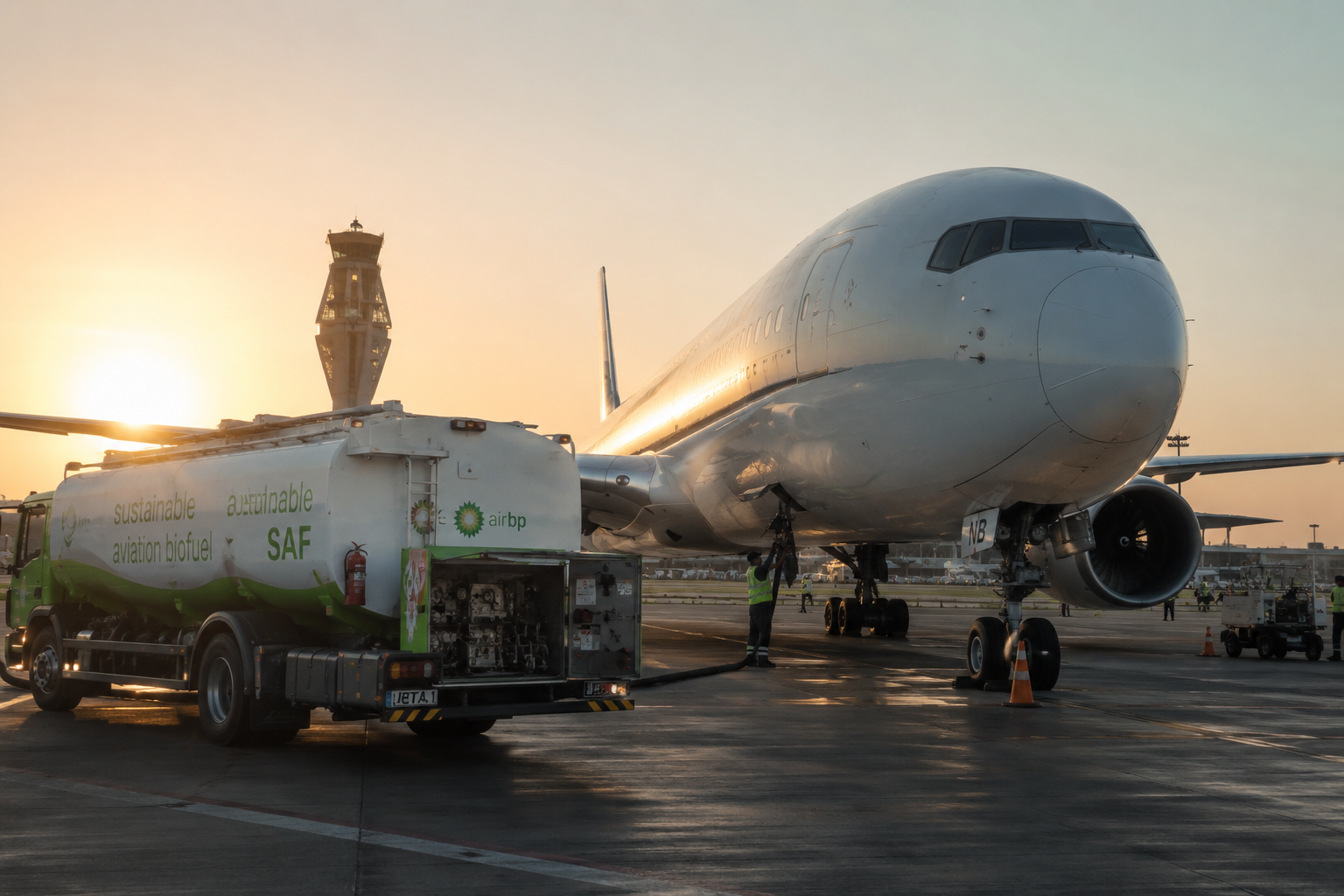
The UAE aviation sector took a concrete step toward its clean energy goals this week. Dubai-based Emirates National Oil Company (ENOC) Group and Abu Dhabi's Allied Biofuels Holding signed a Memorandum of Understanding to explore a formal, long-term supply pathway for Sustainable Aviation Fuel (SAF) and electro-synthetic SAF (e-SAF). This deal sits within the broader framework of the UAE's Net Zero 2050 Strategy, which relies heavily on decarbonizing aviation as a foundational pillar.
The fuels would be produced at Allied Biofuels' integrated facility currently being developed in Uzbekistan, then routed directly to the UAE's aviation hubs. If the initial feasibility assessment proves successful, both parties expect to formalize a binding supply agreement before the Uzbekistan plant begins operations.
Sustainable Aviation Fuel is made from renewable, non-conventional feedstocks such as agricultural waste, used cooking oil, or captured CO2. It can reduce lifecycle carbon emissions by up to 80% compared to conventional jet fuel, and it works in existing aircraft engines without any modification.
Why This Deal Matters Now
Global jet fuel demand is under serious pressure from two directions at once. First, the aviation industry faces intense international scrutiny to reduce its carbon footprint. SAF is the most practical near-term solution, but global supply falls far short of demand. Read our Aviation sector coverage for more on how UAE carriers are positioning for the clean energy transition.
Second, ongoing geopolitical conflicts in the Middle East have disrupted conventional energy supply chains. The resulting shortage of traditional jet fuel has already forced European airlines to cancel thousands of flights from peak summer schedules. For the UAE, which depends on aviation as a pillar of its economy, securing diversified, resilient fuel sources is both a climate priority and a commercial necessity.
Global SAF production currently meets less than 1% of total aviation fuel demand. IATA estimates the industry needs a 100x increase in SAF production by 2050 to meet net-zero targets. This ENOC deal is one of several moves UAE entities are making to secure early supply commitments.
Supporting the UAE's Net Zero 2050 Strategy
The agreement directly supports two national frameworks: the UAE's Sustainable Aviation Fuel Roadmap 2030 and the broader Net Zero 2050 Strategy. Hussain Sultan Lootah, Group CEO of ENOC, described the vision clearly: scaling SAF requires every part of the value chain to develop at the same time, from production and certification to distribution and reliable offtake. ENOC's role is to build the commercial infrastructure that makes SAF a viable, dependable fuel option rather than a niche supplement.
Unlike standard SAF made from biological feedstocks, e-SAF (electro-synthetic SAF) is produced by combining captured CO2 with hydrogen generated from renewable electricity. It offers even deeper carbon reductions and does not compete with food crops for raw materials, making it a more scalable long-term solution.
Building the Supply Chain from Central Asia
The planned supply route would bring advanced synthetic fuels from Uzbekistan directly into the UAE's aviation infrastructure, with the potential to expand into broader regional and international markets from there.
Alfred Benedict, Managing Director of Allied Biofuels Holding, noted that the MoU marks a key milestone for the company's Uzbekistan project, describing it as a step toward building a commercially scalable, long-term decarbonization platform for the aviation sector.
Domestic Infrastructure Is Also Being Strengthened
This agreement builds on parallel moves to secure the UAE's fuel supply chain from domestic shocks as well. ENOC recently partnered with Emirates Petroleum Company (Emarat) to create a structured framework ensuring continuous jet fuel availability at all UAE airports, covering pipeline transfers, truck loading operations, and readiness protocols. See also our Energy section for coverage of UAE fuel infrastructure investments.
Emirates and Etihad have both completed test flights using SAF blends, demonstrating operational readiness. The supply pathway being developed through the ENOC and Allied Biofuels agreement is the next step toward integrating clean aviation fuels into daily airport operations on a commercial scale.