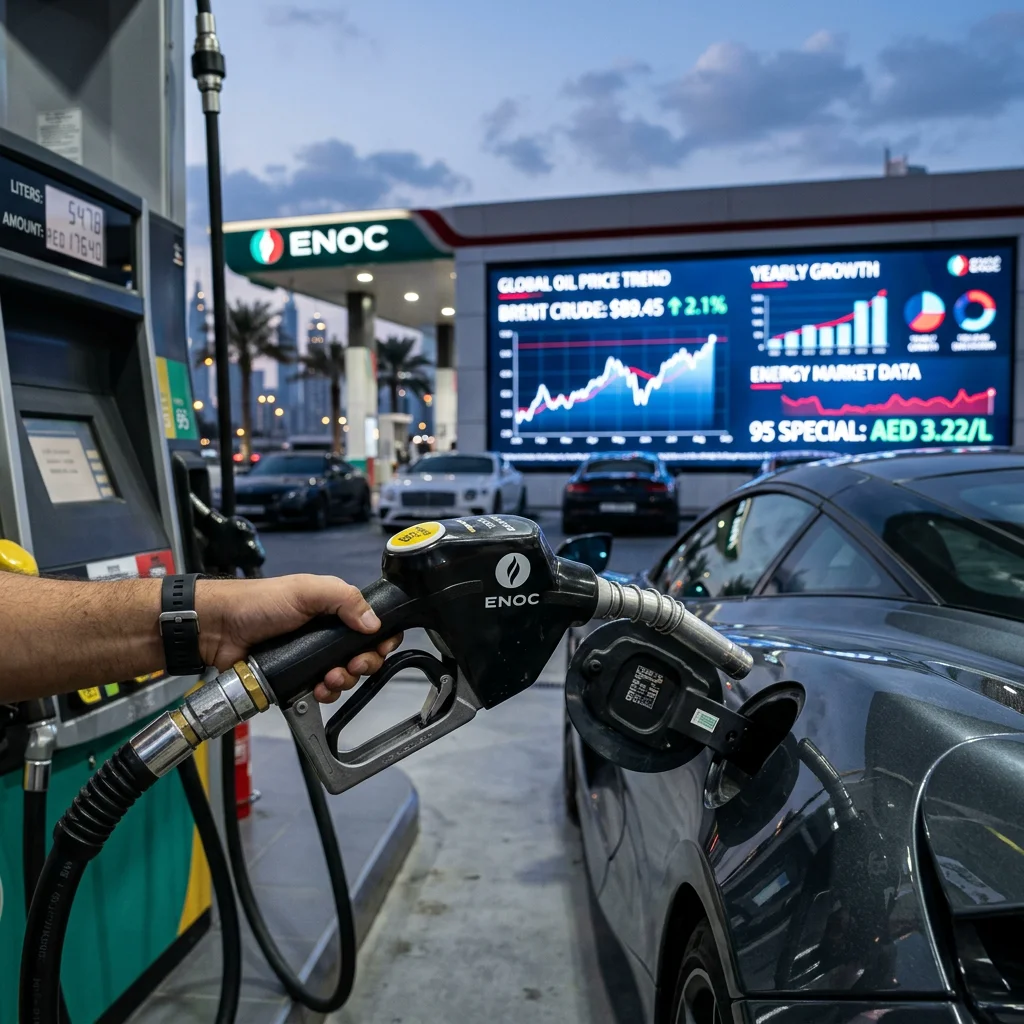
DUBAI – As the UAE Fuel Price Committee prepares to announce retail fuel rates for May later today, motorists are closely monitoring global energy markets. Despite a dramatic rally in crude oil prices this week, analysts suggest that domestic petrol prices for May are likely to remain stable or witness a marginal decline, providing a temporary reprieve before the latest market volatility impacts June’s cycle.
The current pricing dynamic is a result of the UAE’s monthly adjustment mechanism, which calculates retail rates based on the average price of international benchmarks over the preceding month rather than instantaneous spot prices.
The April Average vs. The May Surge
While Brent crude surged 7.6% on Wednesday to reach $119.69 per barrel—its highest level since the onset of the Ukraine conflict in early 2022—this spike arrived too late to significantly alter the May pricing structure.
The anticipated rates for May are primarily influenced by April’s trading averages, which remained relatively lower than the current peak.
Projected Trends for May:
- Petrol (Special 95 & Super 98): Likely to remain stable or see a slight downward adjustment compared to April’s peak shock rates.
- Diesel: Expected to remain elevated due to tighter global supply and sustained industrial demand.
The "Lag Effect": Because May prices are effectively "locked in" by April data, the current surge toward $120 will likely manifest in June’s fuel price announcements.
Geopolitical Tensions and Supply Constraints
The recent escalation in oil prices is directly linked to the effective closure of the Strait of Hormuz, a vital maritime artery responsible for approximately 20% of the world’s oil supply.
- Brent Crude: $119.69 per barrel (7.6% single-day increase).
- Strait of Hormuz: Effectively constrained, disrupting global tanker flows.
- Diplomatic Outlook: Stalled with no immediate signs of breakthrough.
While Iran continues to move some crude through alternative routes, the disruption has created a supply risk premium that has pushed prices from $70 to nearly $120 over the course of the current conflict.
What Motorists Should Expect Next
Historical data from UAE pricing cycles indicates that sharp increases are rarely followed by immediate reversals. Instead, prices tend to stabilize over a one-to-two-month "holding phase" before a clearer trend emerges.
Looking Ahead to June: If Brent crude maintains its position above the $110–$120 range throughout May, UAE motorists should prepare for a renewed upward trend in the June cycle. Significant relief at the pump is unlikely to occur until shipping through the Strait of Hormuz normalizes or diplomatic progress reduces the current supply risk.
"April reflected the peak shock. May will show whether markets can stabilize, but June pricing will be the true barometer of the latest oil market rebound," noted a market analyst.