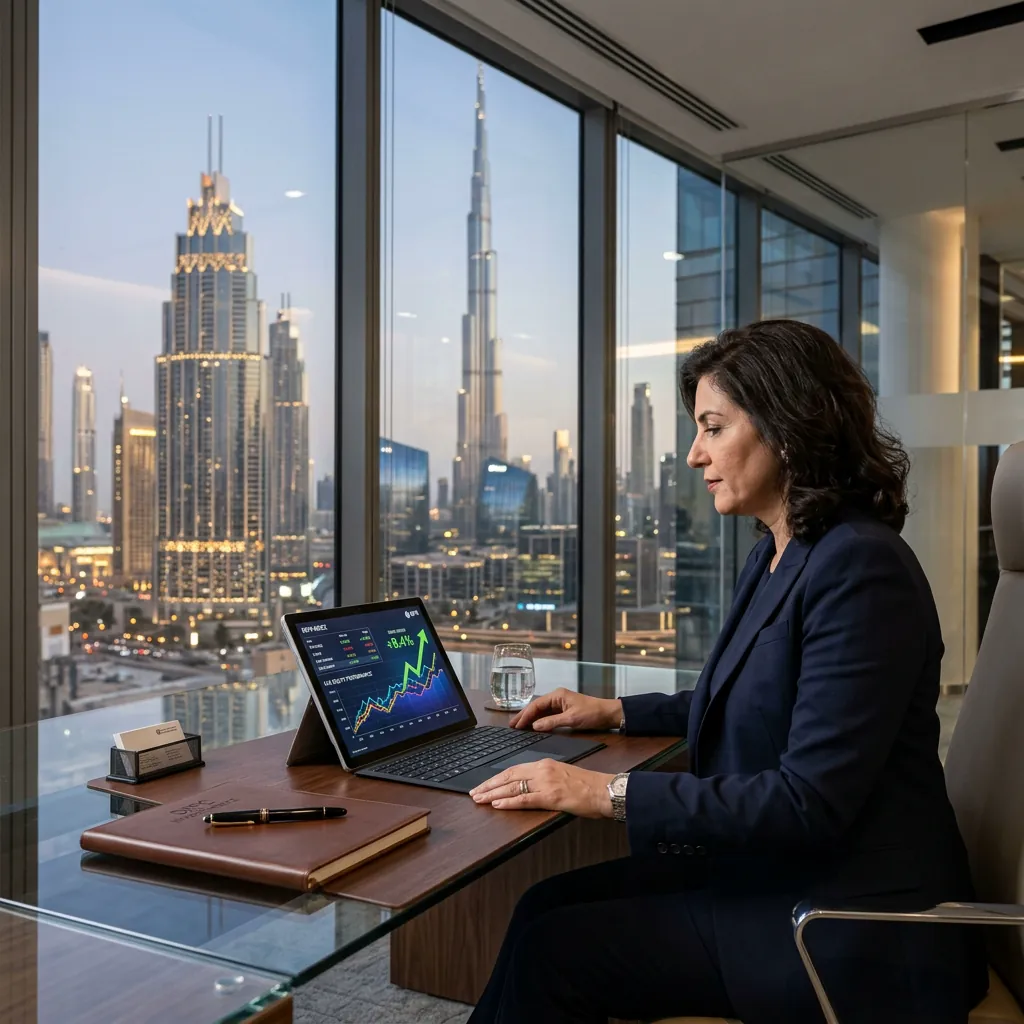
DUBAI — In an era defined by global volatility and heightened regional tensions, a curious trend has emerged in the world of high finance: the United Arab Emirates (UAE) is not just maintaining its appeal—it is accelerating it.
While geopolitical risks often trigger capital flight in other emerging markets, the UAE has successfully decoupled its economic narrative from regional instability. Investors across the spectrum, from institutional hedge funds to tech entrepreneurs, are increasingly viewing the Emirates as a "stress-tested" sanctuary for capital.
The Architecture of Confidence
According to Achraf Drid, Managing Director at XTB MENA, the country’s resilience isn't accidental. It is the result of a deliberate, long-term strategy centered on three pillars: policy consistency, institutional stability, and a diversified economic vision.
"The UAE has built a highly diversified economy, reducing reliance on hydrocarbons while positioning itself as a global hub for finance and technology," Drid explains.
By combining regional access with global regulatory standards, the UAE offers a rare middle ground—an environment where international capital can operate with the same predictability found in London or New York, but with the growth potential of the Middle East and Asia.
A Shifting Investor Profile
The "type" of money entering the country is also changing. The UAE is moving beyond its traditional role as a trading hub to become a magnet for:
- Scale Capital: Institutional investors and global hedge funds.
- Innovation Drivers: Fintech-driven businesses and digital asset companies.
- Relocation Momentum: Entrepreneurs and SMEs fleeing high-tax or low-growth environments in Europe and Asia.
Navigating the Legal Landscape
While the allure is strong, relocation is not without its technical hurdles. Experts note that the primary challenges are no longer bureaucratic red tape, but rather strategic alignment.
Andrea Stefani Melekki, Founder and Managing Partner at Stefani Legal Consultants, warns that the distinction between "Mainland" and "Free Zone" structures remains a critical decision point.
"Setting up or relocating to the UAE offers significant commercial advantages, but errors around licensing and ownership rules can lead to costly restructuring later," Melekki notes.
From Transit to Legacy: The Rise of Wealth Planning
Perhaps the most significant shift in 2026 is the evolution of the UAE from a temporary expatriate hub to a permanent global wealth center. New legal frameworks—specifically Federal Decree-Law No. 41 of 2022—have introduced unprecedented clarity for inheritance and succession.
The country is now a "multi-track" jurisdiction, offering families and high-net-worth individuals sophisticated tools to protect their legacies:
- Family Offices: For governance and multi-generational asset management.
- Foundations & Trusts: Increasingly utilized within financial centers like DIFC and ADGM for asset protection.
- Predictable Inheritance: Moving away from informal arrangements toward enforceable legal structures.
The Verdict
The UAE’s current status is best described as a "flight to quality." In a complex geopolitical environment, transparency and legal enforceability become the ultimate commodities. By building an institutional framework designed to govern and transition wealth across generations, the Emirates has convinced the global market that it isn't just a place to make money—it's the best place to keep it.