Dubai, UAE – The United Arab Emirates' strategic pivot away from hydrocarbons reached a significant milestone this February, with business activity in the non-oil private sector surging to its highest level in twelve months. According to the latest S&P Global Purchasing Managers' Index (PMI), the seasonally adjusted index edged up to 55.0 from 54.9 in January, signaling a robust and accelerating expansion.
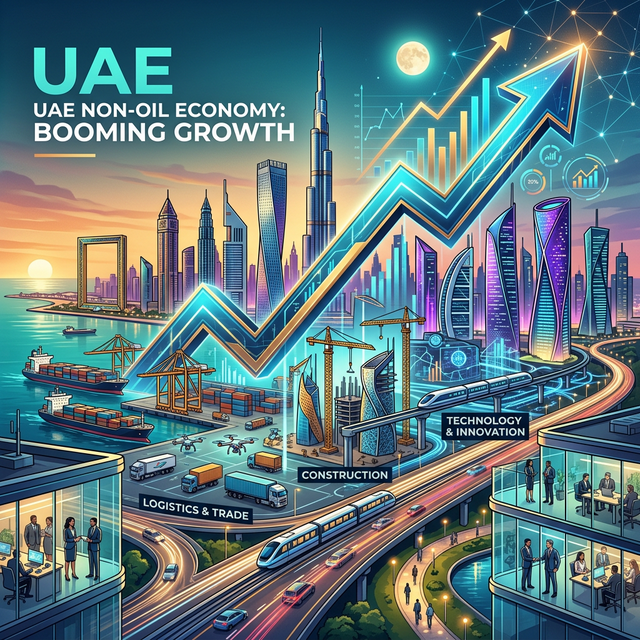
This momentum reinforces the UAE's position as a premier global hub for trade, logistics, and technology, with non-oil sectors now accounting for more than 70% of the national economy.
Engines of Growth: Beyond the Oil Well
The expansion is no longer a broad-stroke recovery; it is being driven by specific, high-performing "engines" of the diversified economy. Business activity grew at its fastest pace since April 2024, propelled by:
- Technology & AI: Increasing demand for artificial intelligence-related products and services. (More on Technology)
- Tourism & Logistics: Massive inflows of international visitors and the expansion of e-commerce platforms.
- Construction & Real Estate: A steady pipeline of new contracts and infrastructure projects.
David Owen, Senior Economist at S&P Global Market Intelligence, noted that the data points to an encouraging first quarter. "Demand has continued to pressure business capacity, suggesting additional expansions in output and employment may be necessary," Owen stated.
The Capacity Crunch: Backlogs and Hiring
Success has brought its own set of challenges. The February data highlighted a sharp increase in outstanding business. Companies are currently struggling to keep pace with a "near two-year high" in new order inflows, leading to a significant buildup of backlogs.
To combat this, the private sector is ramping up its workforce:
- National Level: Employment saw its largest rise since November.
- Dubai Spotlight: The emirate outperformed the national average in job creation, with hiring expanding at its fastest pace in two years. (More on Hiring)
| Metric | February Status | Trend |
|---|---|---|
| UAE PMI | 55.0 | 12-Month High |
| New Orders | Robust | Slight soften from Jan |
| Input Prices | Moderating | Slowest rise since Oct |
| Employment | Increasing | Strongest in Dubai |
Favorable Conditions for Business
Despite the pressure on capacity, the inflationary environment offered businesses some breathing room. Input prices rose only marginally—the slowest increase since October—thanks in part to lower fuel costs. This moderation in operating expenses has allowed firms to maintain a cautious but competitive approach to pricing.
A Look Toward 2026
The structural reforms of the past few years—including 100% foreign ownership and long-term residency visas—are yielding tangible results. The Central Bank of the UAE forecasts real GDP to grow by approximately 5% in 2026, a projection supported by the 4.5% expansion seen in non-oil activities throughout 2025.
With strong population growth and sustained government investment in infrastructure, the UAE's "non-oil engine" appears well-oiled and ready for a high-performance year.