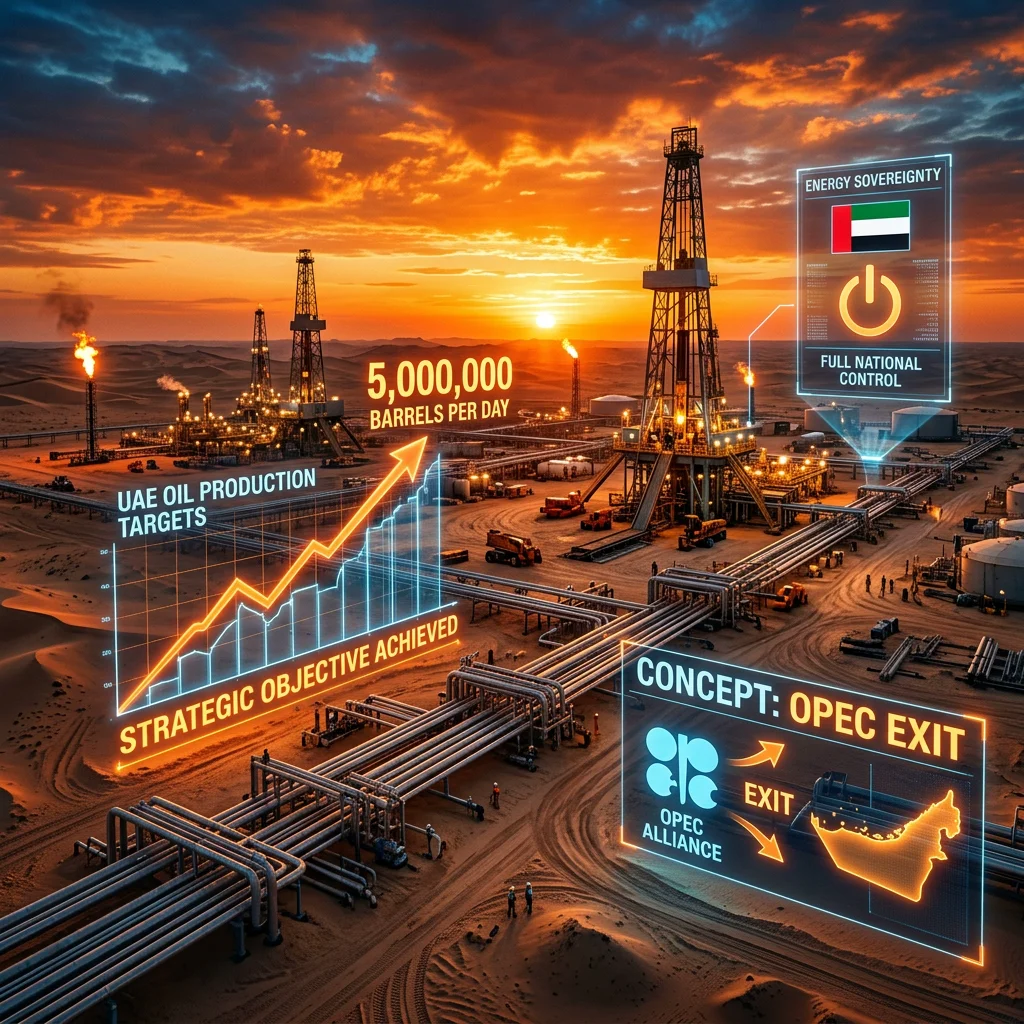
ABU DHABI — The UAE's strategic departure from OPEC is set to unlock a significant wave of employment and business opportunities within the national energy sector. According to Mohammed Juma Al Bawardi, Group CEO of EMDAD, the shift away from production quotas will drive a surge in demand for both specialized technical talent and field operations personnel as the country pursues its target of 5 million barrels per day (mbpd) by 2027.
EMDAD, an integrated services provider under the NMDC Group LTS umbrella, expects to ramp up recruitment across the spectrum — from blue-collar labor to white-collar engineering and management roles.
Production Targets Driving Service Demand
The removal of OPEC-mandated production constraints allows the UAE to capitalize on long-standing investments in its energy infrastructure. While the country has already reached a capacity of approximately 3.4 mbpd, the path to 5 mbpd requires a massive mobilization of technical support.
- Upstream & Downstream Integration: Increased output necessitates intensified field services, equipment maintenance, and refinery-related shutdown work.
- Infrastructure Readiness: The fundamental capital investments to reach the 5 mbpd milestone have largely been made; the operational "man-up" phase is now commencing.
- Turnkey Solutions: Local companies are increasingly moving toward providing end-to-end solutions to support ADNOC and other regional majors.
Localizing the Energy Supply Chain
A key pillar of this transition is the emphasis on In-Country Value (ICV) and localized manufacturing. EMDAD has been investing heavily in domestic capabilities, including the registration of specialized patents in Abu Dhabi for downhole tools such as the whipstock and dual section mill.
"For us, we have been investing heavily to enable localization," Al Bawardi stated. "We are able to facilitate and complement the initiative of the country to push toward that 5 million barrel per day mark."
Resilience Amid Regional Volatility
Addressing recent logistical challenges in the Strait of Hormuz, Al Bawardi emphasized the robustness of the UAE's industrial base. Despite regional supply chain pressures, the petrochemical, fertilizer, and aluminum sectors have maintained significant export volumes — a testament to the UAE's maturing manufacturing sector.
Short-to-Medium Term Outlook
As the UAE accelerates its national initiative to become a more independent and high-capacity producer, local service companies are positioning themselves as primary beneficiaries of the increased workload. With a focus on technology, manpower, and localized supply chains, the UAE's energy services sector is entering a period of rapid expansion fueled by the nation's new era of production sovereignty.