Emirates SkyCargo Opens a New Door Into Central Asia
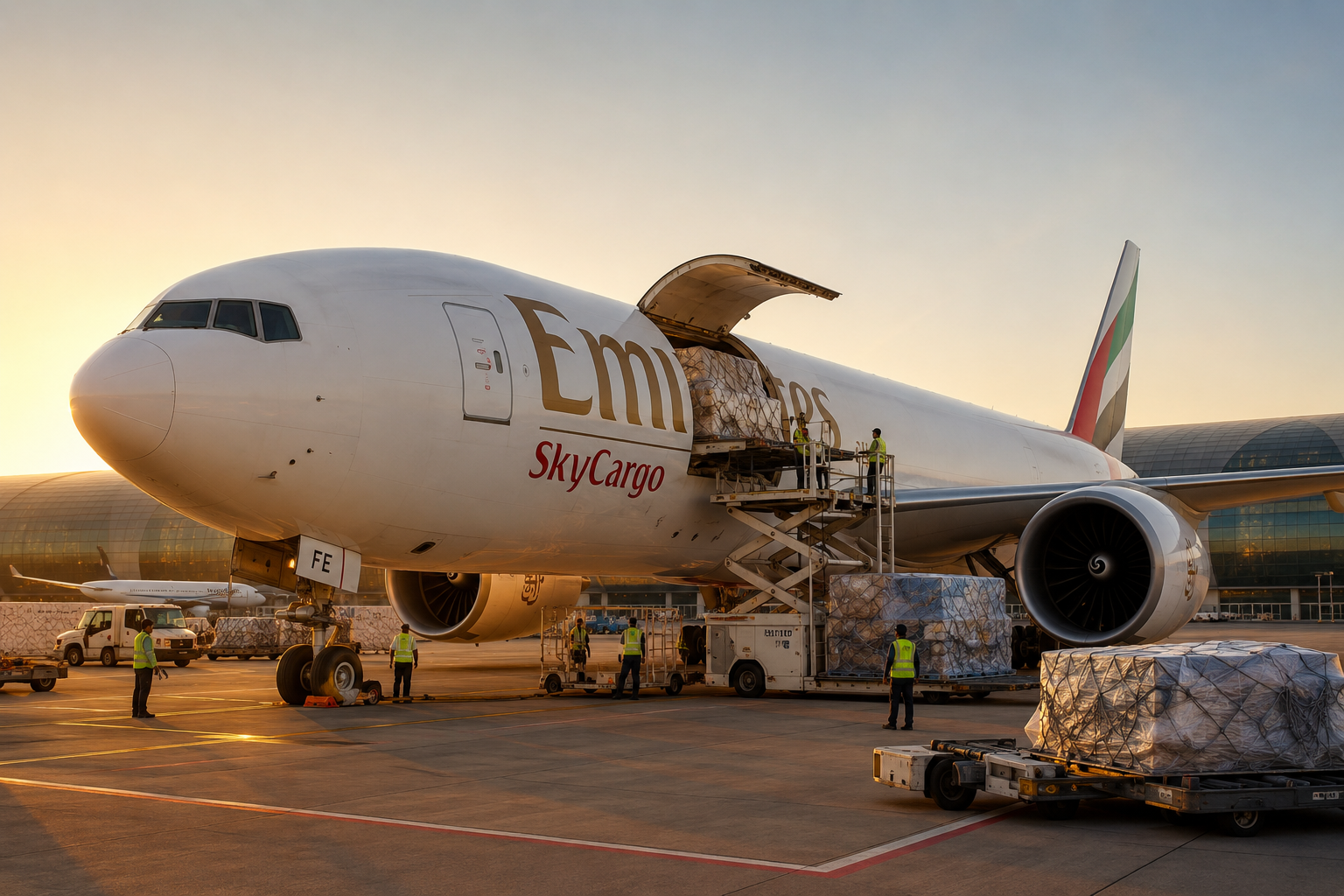
Starting June 16, Emirates SkyCargo will operate weekly freighter services between Dubai and Almaty, Kazakhstan's largest commercial city. It is the carrier's first dedicated cargo route into Central Asia, and it arrives at a moment when the region is drawing increasing interest from global trade and logistics networks.
The service uses Boeing 777F aircraft and operates every Tuesday, adding more than 100 tonnes of cargo capacity each week. That volume is meaningful for a corridor that has historically relied on passenger belly freight or indirect routing through other hubs.
Read Also: Middle East Airlines Face $4.3 Billion Loss in 2026: What It Means for Gulf Aviation
What Moves on This Route
The initial focus commodities for the Dubai to Almaty route include electronics, industrial machinery, perishables, and consumer goods. That breadth reflects Kazakhstan's position as both an importer of finished goods and an exporter of raw materials, agricultural products, and manufactured items, looking for faster routes to global markets.
For Kazakh exporters, connecting to Emirates SkyCargo's wider network through Dubai means access to markets across Asia, Europe, Africa, and the Americas through a single hub. For importers, it means faster delivery of time-sensitive goods like electronics and fresh produce, categories where air freight speed justifies the cost premium.
Dubai to Almaty. Weekly, every Tuesday. Boeing 777F. Over 100 tonnes of cargo capacity per flight. Service starts June 16, 2026.
Why Central Asia, Why Now
Badr Abbas, Divisional Senior Vice President of Emirates SkyCargo, framed the launch as a strategic response to economic growth in Central Asia and rising demand for global trade access. The region is increasingly positioned as a transit and trade corridor between China and Europe, benefiting from both Belt and Road infrastructure development and Western efforts to diversify supply chains away from direct China routes.
Kazakhstan, the largest economy in Central Asia, has been attracting foreign investment in manufacturing, technology, and agri-processing. As those industries grow, so does the need for reliable, high-capacity air freight connections to global markets. Emirates SkyCargo is entering at a point when that demand is growing, but infrastructure has not yet caught up.
Read Also: Dubai's ENOC Signs Deal to Secure Sustainable Aviation Fuel from Central Asia
The Dubai Hub Advantage
The new route reinforces a point that Emirates SkyCargo and Dubai's logistics community make repeatedly: Dubai's geographic position as a connecting point between Asia, Europe, Africa, and the Americas is a structural advantage that is difficult to replicate. Adding a Central Asia connection is not just about Almaty. It is about completing another spoke in a hub-and-spoke network that gives global shippers routing flexibility.
The Almaty service follows a series of recent network expansions by Emirates SkyCargo, including new operations in North America and Asia. The carrier has been investing in fleet growth, additional freighter services, and enhanced ground logistics capabilities as it responds to rising demand across international markets.
For businesses operating in the UAE that source from or sell into Central Asia, this route change has practical implications. Direct freighter capacity from Dubai to Almaty reduces transit times, simplifies customs routing, and removes the cost and risk of transhipment through third-country hubs.