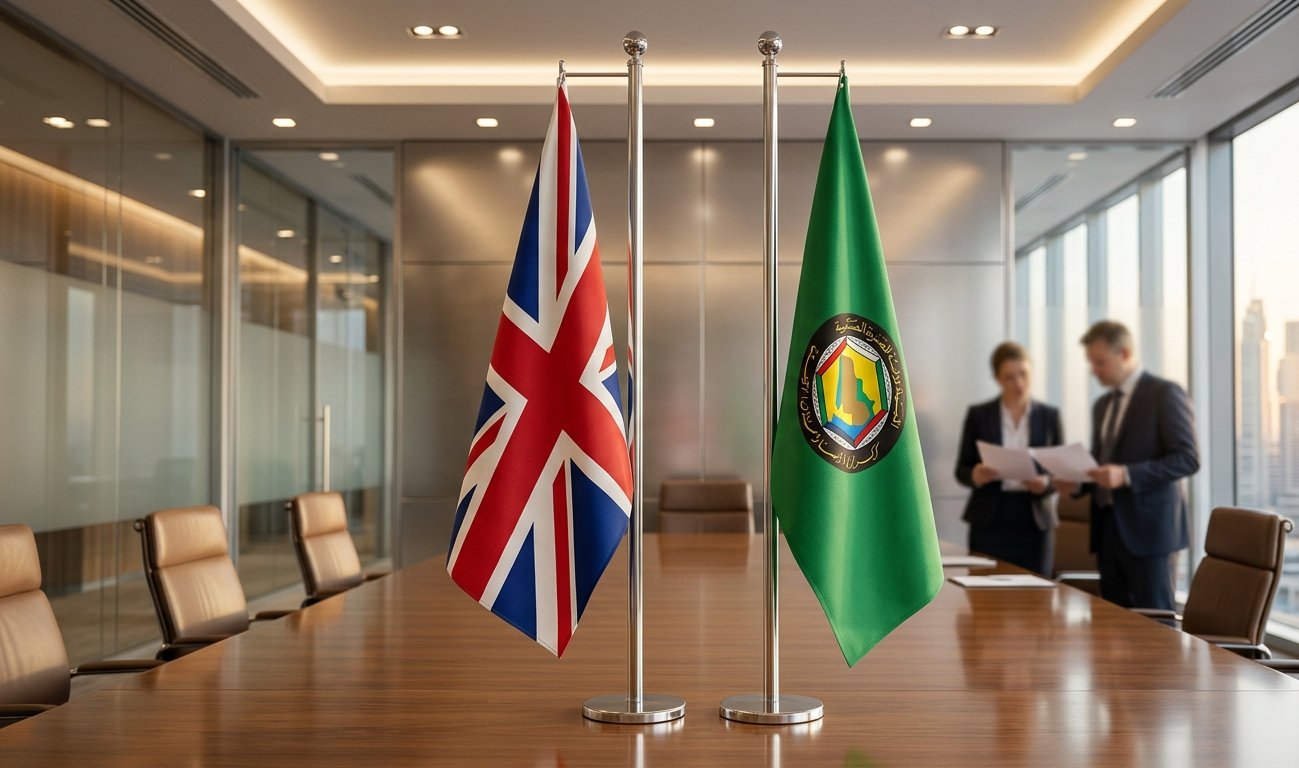
Trade diplomacy rarely produces clean headlines. But the United Kingdom has managed exactly that with the signing of a comprehensive free trade agreement with the Gulf Cooperation Council, a bloc that includes the UAE, Saudi Arabia, Qatar, Bahrain, Kuwait, and Oman.
The deal is the first of its kind between a G7 economy and the GCC, and it has been a long time coming. Years of negotiations have finally produced a framework that both sides believe will reshape the commercial relationship between the UK and the Gulf for decades ahead.
The UK Government estimates the agreement will inject approximately 3.7 billion pounds into the British economy annually in the long term, while boosting real wages by an additional 1.9 billion pounds.
Tariff Cuts: What Changes on Day One
At the heart of the agreement is a sweeping reduction in import duties. British goods entering Gulf markets have historically faced tariffs that added real cost to exporters and made UK products less competitive against alternatives from Europe and Asia. That changes now.
The deal removes a total of 580 million pounds in annual duties on British goods, with approximately 360 million pounds of that eliminated immediately on the day the agreement comes into force. For British exporters who have been pricing these costs into their margins for years, that is a significant structural shift.
| Product | Previous Tariff | Tariff Under FTA |
|---|---|---|
| Chocolate | 15% | 0% |
| Biscuits | 10% | 0% |
| Cheddar Cheese | 6% | 0% |
| Cereals and Butter | Up to 5% | 0% |
| Automotive and Cars | 5% | 0% |
Gulf countries currently import more than 80% of their food. That makes the GCC one of the world's most import-dependent food markets, and the UK's food and drink sector is now in a stronger competitive position than ever to supply it.
Digital Data and Services: The Less-Discussed Breakthrough
The goods story gets the most attention, but the services provisions may be equally important. The UK services sector accounts for roughly 80% of the British economy and already represents half of its exports to the Gulf. This agreement gives those businesses guaranteed, streamlined market access.
Critically, the deal includes what officials are describing as a first-of-its-kind commitment from GCC nations on the free flow of digital data. For the first time, British companies will be permitted to store and process data outside the Gulf region. That opens up cloud computing, fintech, and digital services in a way that was previously complicated by data localisation requirements.
Easier business travel provisions for UK professionals, including architects, engineers, management consultants, and legal advisors, further extend the practical reach of the agreement.
Business and Trade Secretary Peter Kyle described the agreement as sending a clear signal of confidence at a time of increased global instability, giving UK exporters the certainty they need to plan.
Where This Fits in the Bigger Picture
This is not an isolated deal. It is the fifth major international trade pact delivered under the current UK administration, following agreements with India, South Korea, a tariff-capping arrangement with the United States, and ongoing diplomatic normalisation with the European Union.
The timing matters. Global trade has been under pressure from rising protectionism, and both the UK and the GCC have strong incentives to demonstrate that open, rule-based trade frameworks still work. This agreement does that.
Prime Minister Keir Starmer framed it in straightforward terms:
Today's agreement is a huge win for British business and for working people who will feel the benefits in the years ahead through higher wages and more opportunities. The Gulf states are valued economic partners and this agreement deepens that relationship.
What Happens Next
The agreement still requires ratification by all seven signatory governments before it officially comes into force. That process is underway. In the meantime, businesses across both regions are not waiting: companies are already preparing to scale operations and leverage what analysts project will be a 20% expansion in bilateral trade volumes once the treaty is fully active.