Beyond the Ambition: What Dubai Has Actually Built
It is easy to be sceptical when a government announces that it is becoming a technology hub. Most do not follow through. Dubai is one of the places that genuinely has.
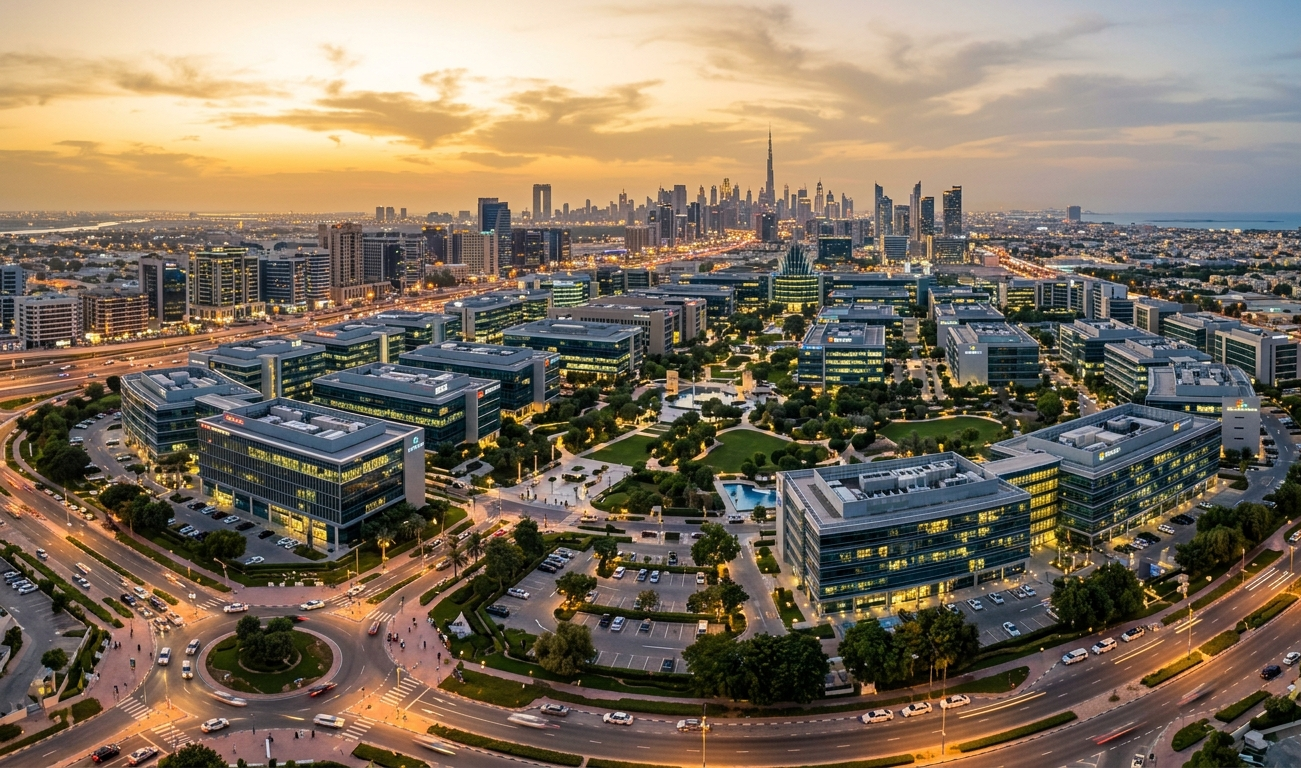
The foundations were laid deliberately. Dubai Internet City, Dubai Silicon Oasis, and the DIFC Innovation Hub have created dedicated zones where technology companies can set up, hire internationally, and operate within frameworks specifically designed for digital businesses. That infrastructure matters enormously for founders who do not want to spend their first six months figuring out regulatory structure.
You can track the latest technology news affecting Dubai's startup community on our Technology category page.
Dubai ranked among the top global startup ecosystems in multiple 2025 and 2026 indices, with MENA-wide deal activity and a growing share of late-stage funding rounds flowing through UAE-headquartered companies.
The AI Layer: This Is Where Things Are Getting Serious
If there is one component of Dubai's technology story that has accelerated most sharply in the last 18 months, it is artificial intelligence. The government moved decisively in 2026 with the creation of a new federal authority dedicated to AI and data governance, a move we covered in depth when it was announced. You can read our full analysis of the UAE Federal AI and Data Authority and what it signals for the private sector.
At the city level, the Dubai Agentic AI plan announced earlier in 2026 directly targets 295,000 businesses across the emirate for AI integration support. That is not a pilot programme. It is a structural commitment to making AI adoption the default across the business community, not just the exception among early adopters.
The UAE AI Strategy 2031 gives this commercial activity a long-term policy anchor. With a national target for AI to contribute 13.6 trillion dirhams to the economy by 2031, the government is not treating AI as merely a technology trend. It is treating it as infrastructure.
The UAE's AI Strategy 2031 targets a contribution of Dh13.6 trillion to the national economy. Dubai's Agentic AI Plan is the city-level execution layer for that target, with 295,000 businesses in its scope.
What the Startup Ecosystem Actually Looks Like on the Ground
Numbers are only useful when they reflect real activity. In Dubai's case, the activity is real. Funding rounds are happening across verticals. Fintech remains the dominant category, as we documented in our detailed breakdown of the UAE fintech startup landscape in 2026. But the deal flow is broadening into healthtech, proptech, logistics, and AI-native businesses.
The founder community has also diversified significantly. Dubai's Golden Visa programme for founders and investors has made long-term residency accessible to a much wider range of entrepreneurs. Combined with a 0 percent corporate tax rate for qualifying businesses and deep talent pipelines from the Indian subcontinent, Europe, and East Africa, the emirate has genuinely competitive fundamentals for building a technology business.
For founders thinking about the practical side of building here, our guide on hiring in the UAE as a startup founder in 2026 covers the visa rules, salary expectations, and employment framework in detail.
The App Economy: Dubai as a Product Market
One angle that often gets missed in the broader narrative is Dubai as a product market for app-based businesses. The city has a highly connected, high-income, smartphone-first population that adopts digital products at rates comparable to leading global markets. That makes it genuinely valuable as both a launch market and a proof-of-concept environment for app-based businesses targeting the Gulf and the wider MENA region.
Government services have also gone deeply digital. The integration of app-based interactions across licensing, payments, transport, and public services has created a population accustomed to managing their lives through digital platforms. For startups building products in those spaces, the baseline user behaviour is already established.
Where the Gaps and Challenges Still Exist
An honest picture of Dubai's innovation ecosystem has to include the parts that are still works in progress:
- Exit environment. IPO and M&A activity in the MENA region, while improving, remains thinner than comparable markets. Founders and investors have fewer exit paths than in more mature ecosystems.
- Deep tech funding. Dubai is strong on fintech, proptech, and consumer apps. It is less developed in deep tech, semiconductors, and hardware, which require a different kind of patient capital and research infrastructure.
- Talent competition. The same visa frameworks that attract talent also create competition. Dubai's best-resourced companies and government entities compete hard for the same technical talent pool that startups need.
- Cost of operation. Office space, cost of living, and visa fees make Dubai a relatively expensive place to run a lean early-stage startup compared with some competing ecosystems. Read our startup hiring cost breakdown for specific figures.
For founders evaluating Dubai vs other global hubs: the city's strengths are in its regulatory infrastructure, investor access, government-backed adoption programmes, and market demographics. The gaps are in deep tech, exit liquidity, and early-stage cost efficiency.
The Broader Strategic Picture
Dubai's technology ambition is tightly connected to the emirate's economic diversification strategy. The government is clear that it cannot rely on financial services and real estate alone as economic pillars indefinitely. Technology, and specifically AI-enabled technology, is the growth engine it is actively building.
The DIFC's expanding fintech and innovation mandate, the DMCC's digital commodity infrastructure, and Sheikh Hamdan's stated philosophy of leading through disruption rather than waiting for stability all point in the same direction. Dubai is not building a startup ecosystem as a side project. It is building it as the successor infrastructure to an economy that is deliberately evolving.
For B2B businesses, investors, and founders considering the region, the signal coming out of Dubai in 2026 is consistent: the commitment is structural, the investment is real, and the window for early positioning in a maturing market is narrowing. Track the latest developments on our funding and technology pages.