DEWA has spent the past decade issuing bigger and bigger numbers for the Mohammed bin Rashid Al Maktoum Solar Park. The original 2030 capacity target was 5,000 megawatts. That figure has since been revised twice, and DEWA's own statements have not always agreed with each other about where the target now sits. What has not moved as quickly is the commissioned capacity actually feeding Dubai's grid. As of DEWA's most recent disclosures, the solar park stood at 3,860 megawatts, roughly the same figure the utility has reported since late 2025. DSD built a phase by phase tracker using DEWA's own project disclosures and IRENA's regional capacity data to show exactly where the promised versus delivered gap sits today, and why it matters for anyone running a power hungry business in Dubai.
The Scorecard: Built vs Announced
The table below sets out each phase of the solar park against its capacity, its status, and the year it was promised to be operational. Figures are drawn directly from DEWA's own releases and from Masdar, DEWA's IPP partner on phases three and six.
| Phase | Capacity | Status as of August 2026 | Originally Promised |
|---|---|---|---|
| Phase 1 | 13 MW | Built, operational since 2013 | 2013 |
| Phase 2 | 200 MW | Built, operational since 2017 | 2017 |
| Phase 3 | 800 MW (PV, IPP with Masdar and EDF) | Built, fully operational since 2020 | 2020 |
| Phase 4 | 950 MW (CSP plus PV, Noor Energy 1) | Built, operational, holds four Guinness World Records for CSP scale | 2022 to 2023 |
| Phase 5 | Included in the 3,460 MW pre-Phase 6 total | Built, commissioned | 2023 |
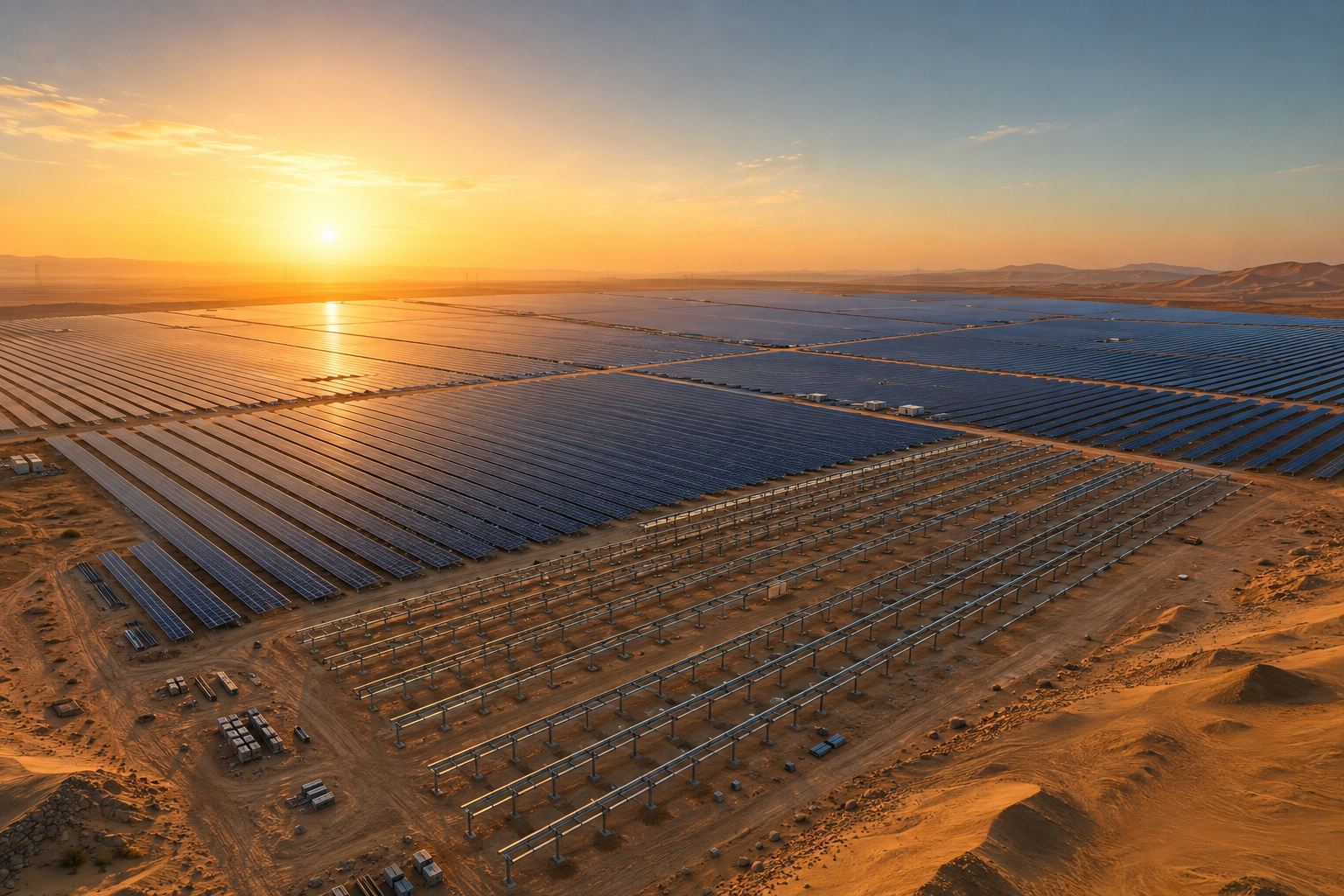
| Phase 6 | 1,800 MW (doubled from an original 900 MW plan) | Partially built. 800 MW still under construction as of DEWA's Nov 2025 disclosure | 2024 to 2026 |
| Phase 7 | 2,000 MW PV plus 1,400 MW / 8,400 MWh battery storage | Announced only. Bids received mid-2026, award pending | By 2030 |
Commissioned solar park capacity: 3,860 MW Clean energy share of Dubai's total power mix: more than 21.5 percent Original 2030 solar park target: 5,000 MW DEWA's revised 2030 target (per its Nov 2025 statement): 8,060 MW A separate 2025 figure cited by trade press for the same 2030 milestone: 7,260 MW UAE-wide solar capacity at end of 2025 (IRENA): 7,525 MW
What Is Actually Delivering Power Today
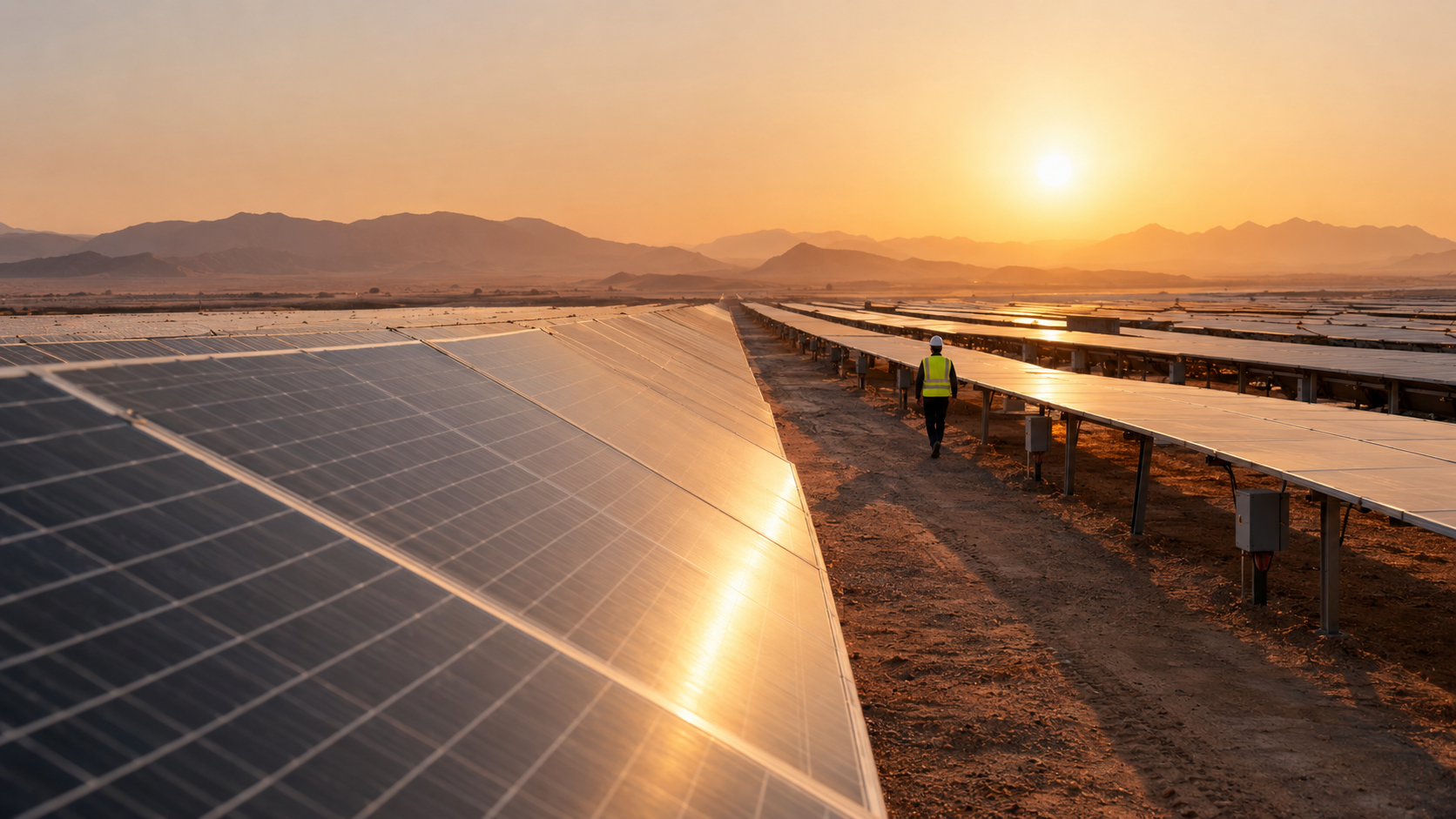
The first five phases of the solar park, spanning photovoltaic and concentrated solar power technology, were fully commissioned by 2023 and now form the reliable core of Dubai's clean energy supply. Phase 4, known as Noor Energy 1, is the standout technical achievement of the project so far. It holds four Guinness World Records, including the largest single operator concentrated solar power plant at 700 megawatts and the tallest CSP tower at more than 263 metres, and it gives DEWA 15 hours of thermal storage, letting the plant deliver solar generated electricity well after sunset.
Phase 6 is where the promise and the delivery start to diverge. DEWA and Masdar reached financial close on the 1,800 megawatt phase in early 2024, with public materials at the time describing a 2024 to 2026 delivery window. DEWA's own November 2025 update confirmed that 1,000 megawatts of the phase had been added during 2025, but also stated plainly that 800 megawatts remained under construction. Trade publication MEED has since reported that commissioning of the full phase is now expected around the third quarter of 2026, later than the window originally suggested when the deal was signed.
The Moving Target
The more interesting story for a business audience is not that Phase 6 slipped by a few months. It is that DEWA's own long range target keeps changing, and different official statements have not always used the same number. DEWA's own November 2025 press release quotes CEO Saeed Mohammed Al Tayer stating that the solar park's total production capacity will reach 8,060 megawatts by 2030 once the seventh phase is complete. Separately, trade coverage of the same period cites a revised 2030 target of 7,260 megawatts, a 45 percent increase on the original 5,000 megawatt plan. Both figures represent genuine upward revisions from the original target, and both are plausible depending on which projects and storage assets are counted in the total. But the fact that two figures for the same milestone have circulated within the same reporting cycle is itself worth flagging for anyone using DEWA's targets to plan long term power procurement or ESG disclosures.
The share of clean energy in Dubai's overall power mix tells a similar story of upward revision. The original Dubai Clean Energy Strategy 2050 target for 2030 was 25 percent. DEWA has since raised that target to 36 percent, while the figure actually achieved as of mid-2026 stands at just over 21.5 percent. Reaching 36 percent in the roughly four years remaining before 2030 will require the seventh phase and any subsequent phases to come online largely on schedule, a track record Phase 6 has not fully delivered on so far.
Phase 7 is not simply more solar panels. Its 1,400 MW battery system, storing up to 8,400 megawatt-hours, is DEWA's largest firm commitment yet to delivering solar power outside daylight hours. That distinction matters for any business whose operations depend on round the clock power quality, particularly data centres and AI compute facilities scaling up in Dubai alongside projects such as Stargate UAE. Solar-plus-storage at this scale also strengthens the case DEWA can make to large industrial and technology tenants seeking verifiable clean power for ESG reporting, rather than clean capacity that only exists for part of the day.
How Dubai's Build-Out Compares Regionally
Placed against the wider UAE picture, Dubai's solar park remains the single largest concentration of solar capacity in the country. IRENA's Renewable Capacity Statistics 2026 puts total UAE solar capacity at 7,525 megawatts at the end of 2025, split between 6,716 megawatts of photovoltaic capacity and 809 megawatts of concentrated solar power, and notes that solar accounted for 95 percent of all renewable capacity added nationally that year. Dubai's solar park, at 3,860 megawatts, therefore represents just over half of the UAE's total solar fleet, with the balance made up largely of Abu Dhabi projects such as Al Dhafra and Noor Abu Dhabi. For a city that holds only a fraction of the UAE's land area, that concentration underlines how central the solar park is to the emirate's own clean energy claims, and how much weight Phase 7's outcome will carry for Dubai's 2030 numbers specifically.
What This Means for Dubai Businesses
- Power procurement planning: Businesses signing long term power agreements or evaluating solar-backed tariffs should treat DEWA's 2030 capacity figures as directional rather than fixed, given the multiple revisions on record.
- ESG and disclosure reporting: Firms citing Dubai's clean energy share in sustainability reports should use the commissioned 21.5 percent figure rather than the 36 percent target, and should note the distinction clearly to auditors and investors.
- Data centre and AI infrastructure planning: Phase 7's battery storage component is the first solar-plus-storage asset at this scale in DEWA's portfolio, relevant to compute heavy tenants weighing power availability windows.
- Real estate and industrial site selection: Areas served directly by solar park capacity may see earlier access to verified clean power certification through DEWA's Shams Dubai and D33 renewable energy certificate programmes.
Read Also