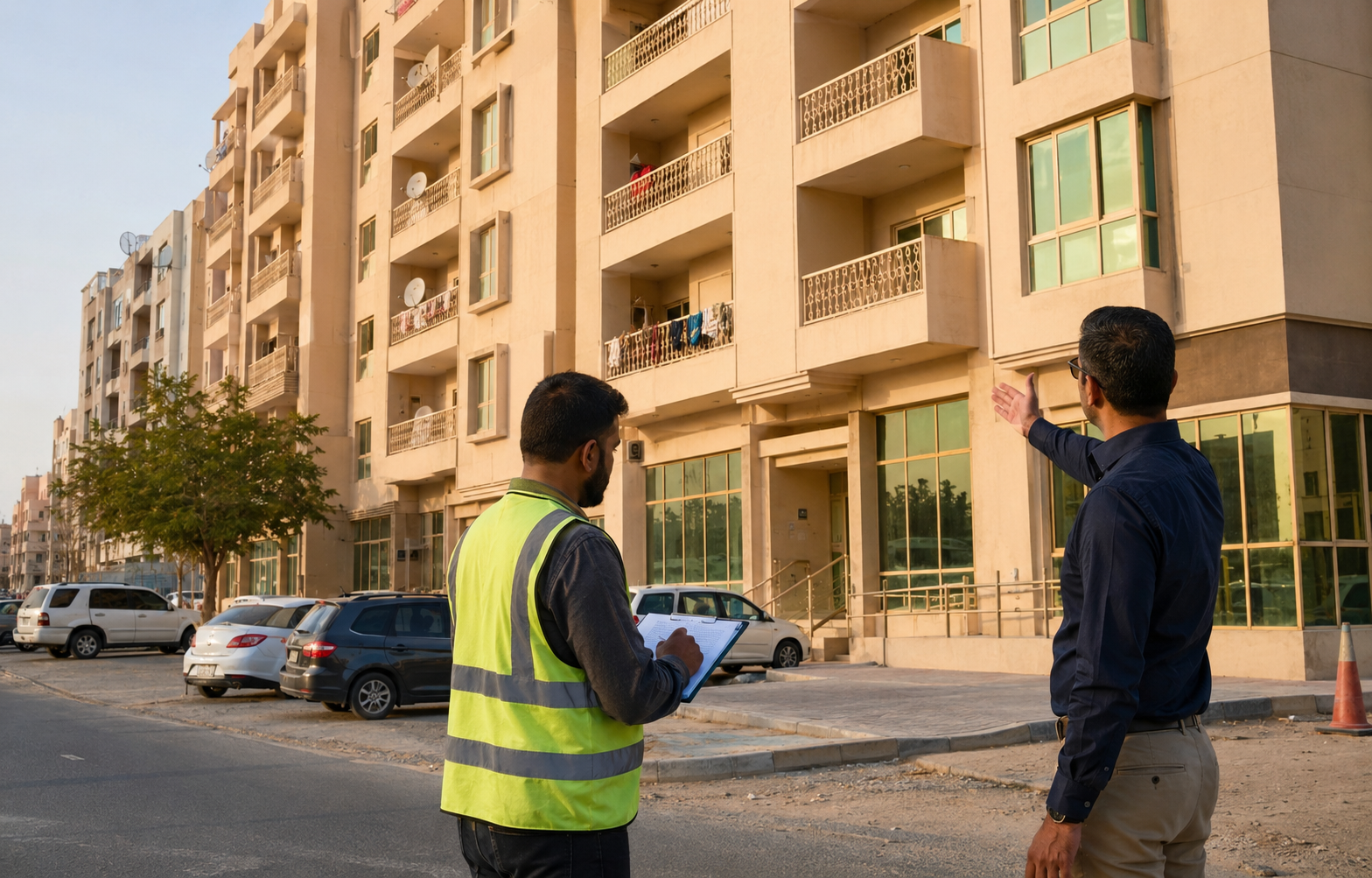
Dubai is moving to formalise one of its largest but least regulated housing segments. A new law governing shared accommodation, Law No. 4 of 2026, was announced in March and takes effect in late August, according to Khaleej Times. For property operators, real estate investors and HR teams managing staff housing, the law replaces years of informal bed space and partition arrangements with a permitted, registered system.
Who is allowed to live in shared housing
Dr Hasan Elhais, a legal consultant quoted by Khaleej Times, said the law identifies six categories eligible for shared accommodation. The definition is broader than the traditional idea of unrelated workers splitting a flat.
| # | Eligible category |
|---|---|
| 1 | Families |
| 2 | Individual women |
| 3 | Individual men |
| 4 | Female students |
| 5 | Male students |
| 6 | Government employees and workers of private companies and establishments |
Collective labour accommodation is excluded from the law and continues to be governed separately. The legislation applies emirate wide, including private development zones and free zones, which means the rules reach far beyond older, lower cost neighbourhoods.
Rent, bills and permits
Rent for shared accommodation will default to a monthly, in advance payment structure, unless the landlord and occupant agree to a different schedule in the tenancy contract. Electricity and water bills are included in the rent by default under the new law, again unless both parties agree otherwise. That default setting could reshape pricing conversations for operators used to quoting bare rent.
No property can be designated for shared housing without a permit issued by Dubai Municipality, in coordination with the Dubai Land Department. Only property owners, or companies authorised to manage or lease on an owner's behalf, may legally rent out shared accommodation. Tenants themselves are excluded from subleasing shared units further down the chain.
The Dubai Land Department will also run an electronic Shared Housing Register tracking approved units, tenancy contracts and residents, linked to a unified digital permit platform operated by Dubai Municipality, according to guidance published by LexisNexis Middle East on the new law. A dedicated rental index for shared housing is also planned, though the DLD has not yet said when it will launch or exactly how rates will be calculated.
Compliance deadline and penalties
Property owners and operators currently running shared housing arrangements have roughly one year from the law's effective date to bring their units into compliance, putting the deadline around August 2027, based on Gulf News reporting on the rollout. Violations of the law can carry fines of up to Dh1 million, a sharp escalation from the smaller penalties that applied to illegal sharing arrangements in the past.
March 2026: Law No. 4 of 2026 announced by Sheikh Mohammed bin Rashid Al Maktoum. Late August 2026: Law takes effect across Dubai, including free zones. Around August 2027: Compliance deadline for existing shared housing operators. Fines: Up to Dh1 million for violations once the law is in force.
The B2B angle
For real estate operators, co living platforms and staff accommodation providers, the shift from informal to permitted shared housing is likely to raise operating costs in the short term, permits, registration, unit standards, while reducing legal risk and improving pricing transparency over the medium term. Consultancy Mitchell's Commercial Real Estate has suggested the reform could standardise pricing across the segment and reduce informal rent setting, a dynamic worth watching alongside the wider cooling in Dubai's residential market covered in DSD's report on UAE office rents surging as residential markets cool.
READ ALSO
→ UAE Office Rents Surge as Residential and Hospitality Markets Cool, CBRE Reports
→ Dubai Property Transactions Hit AED419.9 Billion in H1 2026 as Off-Plan Offices Break Records