Walk into any home, hotel lobby, or shopping mall in the UAE, and you'll notice something immediately: the air smells different. Richer. Deeper. More complex. That's not an accident. Fragrance is woven into Emirati culture at a level few outsiders immediately appreciate, and it goes back thousands of years.
By 200 AD, the Arabian Peninsula was exporting more than 3,000 tonnes of frankincense and myrrh annually to the Mediterranean world, generating wealth that built cities and funded empires. The Incense Road, the ancient trading route linking the Gulf to Rome, Egypt, and beyond, was one of the most lucrative commercial corridors in human history.
Today, that heritage has been channelled into a thriving modern industry. Dubai sits at the centre of a global fragrance market where East meets West, ancient ritual meets cutting-edge science, and where one raw material above all others commands reverence: Oud.
What Exactly Is Oud?
Oud, sometimes called 'liquid gold', is one of the rarest and most expensive raw materials in perfumery. A single kilogram of high-grade Oud oil can fetch tens of thousands of dollars on the international market.
It originates in the Aquilaria tree, found across Southeast Asia and parts of South Asia. Here's the fascinating part: the tree doesn't produce Oud naturally. When the Aquilaria is injured or infected by a specific mould, it triggers a biological defence response, secreting a dense, dark, intensely aromatic resin deep within its heartwood. That resin is Oud.
The rarer the infection event, the more complex and prized the Oud. When the infection is forced through human intervention, drilling or scoring the bark, the resin takes 7 to 12 years to form. When nature does it alone, the process can take 20 to 50 years, producing a profile of extraordinary depth with rich animalic and woody undertones.
From Tree to Bottle: The Artisanal Process
Once harvested, artisans separate the resin-saturated dark wood from the healthy pale wood around it, a time-consuming, skill-intensive task. The resinous chips are then ground, soaked in water for days or weeks to ferment, and distilled to yield the precious oil.
As Abdulla Ajmal, CEO of Ajmal Dubai, one of the region's most storied fragrance houses, explains: small variables like water quality, soaking time, pressure, and temperature can dramatically alter the final scent profile. Even with modern equipment, expert human judgement remains irreplaceable at every stage of evaluation.
Why Arabian Perfumery Smells Different: The Science of the Desert
The contrast between Western and Arabian perfumery traditions is not just cultural, it's scientific. Western fragrances have historically emphasised fresh, airy notes: light citrus, crisp florals, green accords. These work beautifully in the temperate climates of Europe and North America.
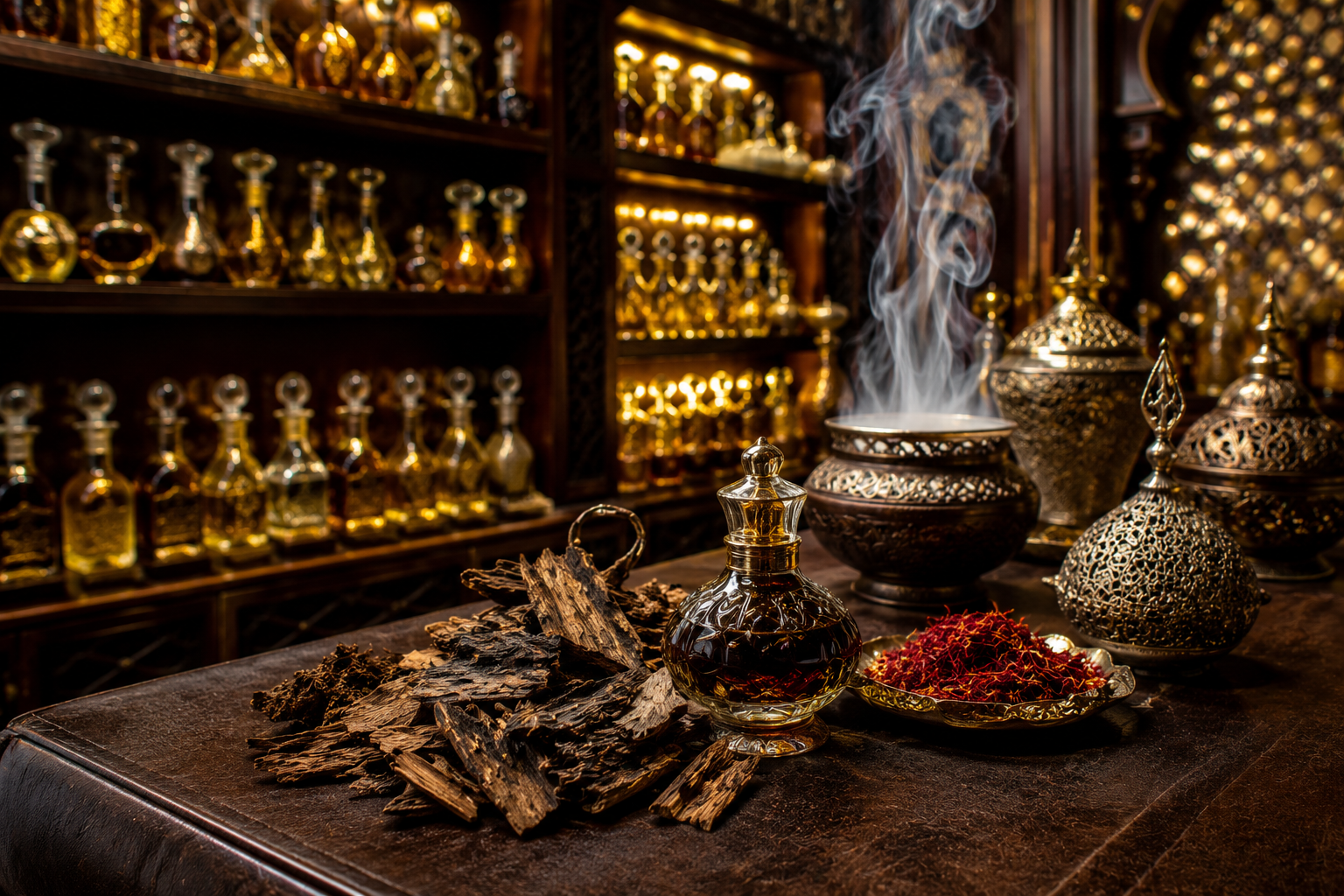
In the UAE, where summer temperatures routinely exceed 40°C, those same top notes evaporate almost instantly on skin. Arabian perfumery evolved a fundamentally different solution: build around dense, high-molecular-weight base notes like Oud, amber, musk, and saffron. These materials have low volatility; they unfold slowly over many hours, releasing smoky, woody, leathery, and spiced facets even in intense heat. A well-layered Emirati fragrance can linger on clothing for days.
The Art of Scent Layering
Fragrance in the UAE is not a single product; it is a ritual, a daily practice of building a personalised scent signature through multiple layers:
- Step 1: Bakhoor. Bakhoor (wood chips soaked in fragrant oils, burned so the smoke infuses clothing and hair).
- Step 2: Dehn El Oud. Dehn El Oud (concentrated pure Oud oil applied directly to pulse points).
- Step 3: Spray Perfume. Eau de Parfum spray is worn as the final top layer to add contemporary character.
The result is a deeply complex, evolving scent that is unique to the individual, part heritage, part personal expression.
Dubai: Where Ancient Heritage Meets Modern Luxury
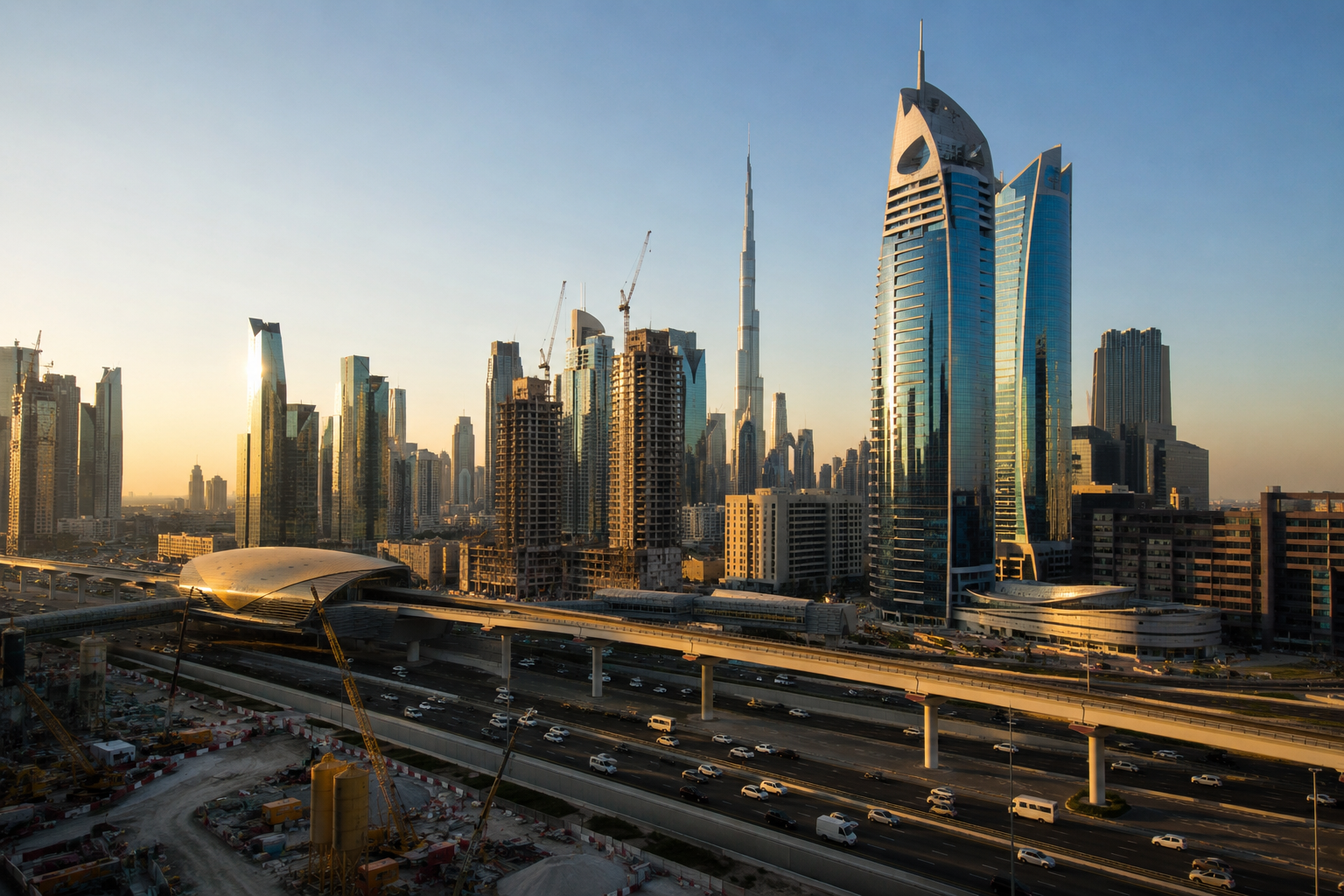
Dubai has become the meeting point of the global fragrance world. Heritage Gulf brands like Ajmal, Rasasi, and Arabian Oud share shelf space with international luxury houses and Western brands regularly launch Oud-centric collections specifically for the Gulf market, recognising the region's influence on global fragrance trends.
A notable shift is emerging among younger Emirati and Arab consumers: while traditional heavy animalic compositions remain deeply respected, there is growing demand for cleaner, fresher, more globally wearable interpretations of Oud. The ancient ingredient is evolving, but its central place in UAE culture is permanent.
| ✦ The UAE's fragrance culture traces directly to the ancient Incense Road, where Arabia exported 3,000+ tonnes of incense annually by 200 AD. |
| ✦ Oud is produced by the Aquilaria tree's defence response to infection a process taking 7–50 years, making it one of the world's rarest natural materials. |
| ✦ Arabian perfumery relies on dense base notes (Oud, amber, musk) because light top notes evaporate almost instantly in 40°C+ Gulf heat. |
| ✦ Scent layering bakhoor, oud oil, and spray perfume combined is a daily cultural ritual in the UAE. |
| ✦ Dubai is now the global hub where Gulf heritage fragrance brands and Western luxury houses converge. |