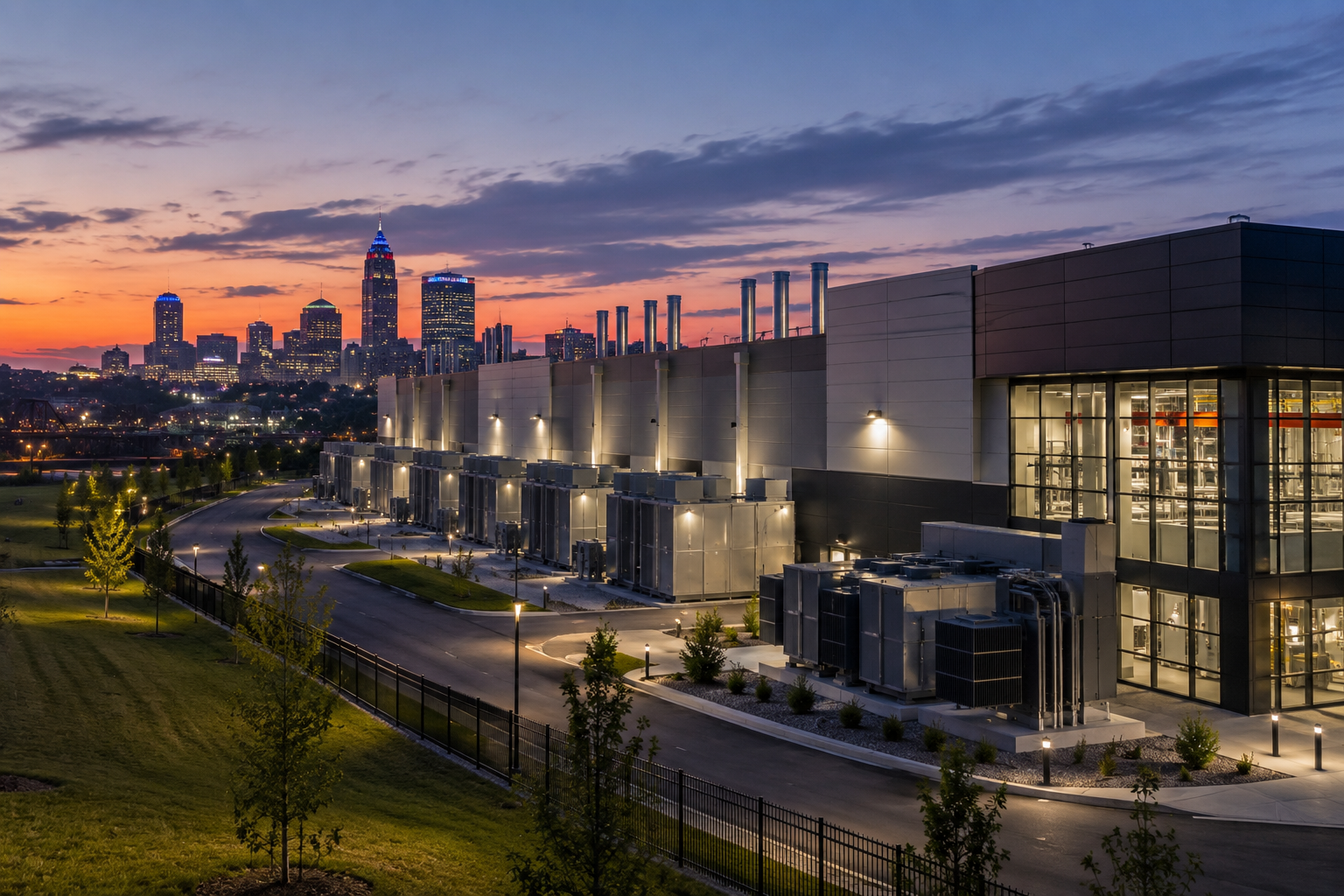
Ohio wants Gulf money, and it has a compelling story to tell. The US state's economy is closing in on the $1 trillion mark, its GDP sitting at roughly $967 billion, and state officials have been making a direct push for foreign direct investment (FDI) from GCC sovereign wealth funds and private investors.
This is not a casual outreach. Ohio has dispatched officials and investment bodies to the Gulf with a tailored pitch built around sectors that Gulf capital is already chasing: artificial intelligence, semiconductors, healthcare, data centres, real estate, and aerospace.
Ohio's Numbers at a Glance
| Metric | Detail |
|---|---|
| Current GDP | Approx. $967 billion (approaching $1 trillion) |
| Target FDI sectors | AI, semiconductors, healthcare, data centres, real estate, aerospace |
| Key advantage | Low operating costs, stable business climate, central US location |
| Existing partners | Japan, South Korea, Europe (now targeting GCC) |
| Lead body | JobsOhio (state economic development organisation) |
Why Ohio Is Making Sense for Gulf Capital
Several factors are drawing attention from Gulf investors. Ohio sits at the geographic heart of the United States, within a one-day drive of more than 60 percent of the country's population and industrial base. Operating costs are significantly lower than coastal hubs, and the state is investing heavily in workforce development, including AI training programmes, to build the talent pipeline that high-tech sectors demand.
The state also benefits from low exposure to natural disasters and a business-friendly regulatory environment, both factors that institutional investors weigh carefully. And critically for Gulf sovereign wealth funds with long-horizon mandates, Ohio's growth is broad-based and structural rather than cyclical.
1. Artificial intelligence and data infrastructure 2. Semiconductor manufacturing 3. Healthcare and life sciences 4. Aerospace and advanced manufacturing 5. Real estate and commercial development
How This Connects to the Gulf's Diversification Push
GCC sovereign wealth funds including Abu Dhabi Investment Authority (ADIA) and Mubadala have been actively diversifying their US investment footprints beyond traditional coastal tech and finance hubs. Ohio's push fits neatly into that trend.
The timing also aligns with the broader US-GCC economic relationship, which has deepened substantially following diplomatic engagement between Washington and Gulf capitals. For UAE and Saudi investors in particular, locking in positions in US industrial and technology sectors now, before competition for assets intensifies, makes strategic sense.
Related: Abu Dhabi Reviews Sovereign Wealth Fund Performance Amid Global Shifts
What This Means for UAE-Based Businesses
For UAE businesses and investors tracking international FDI flows, Ohio's push signals a broader pattern: US states are increasingly willing to come to the Gulf rather than waiting for Gulf capital to find them. Expect similar outreach from other US industrial states as competition for sovereign and private GCC capital grows in 2026 and beyond.
Also read: This Week in the UAE: New Flight Routes, a $3 Billion AI Valuation, and More