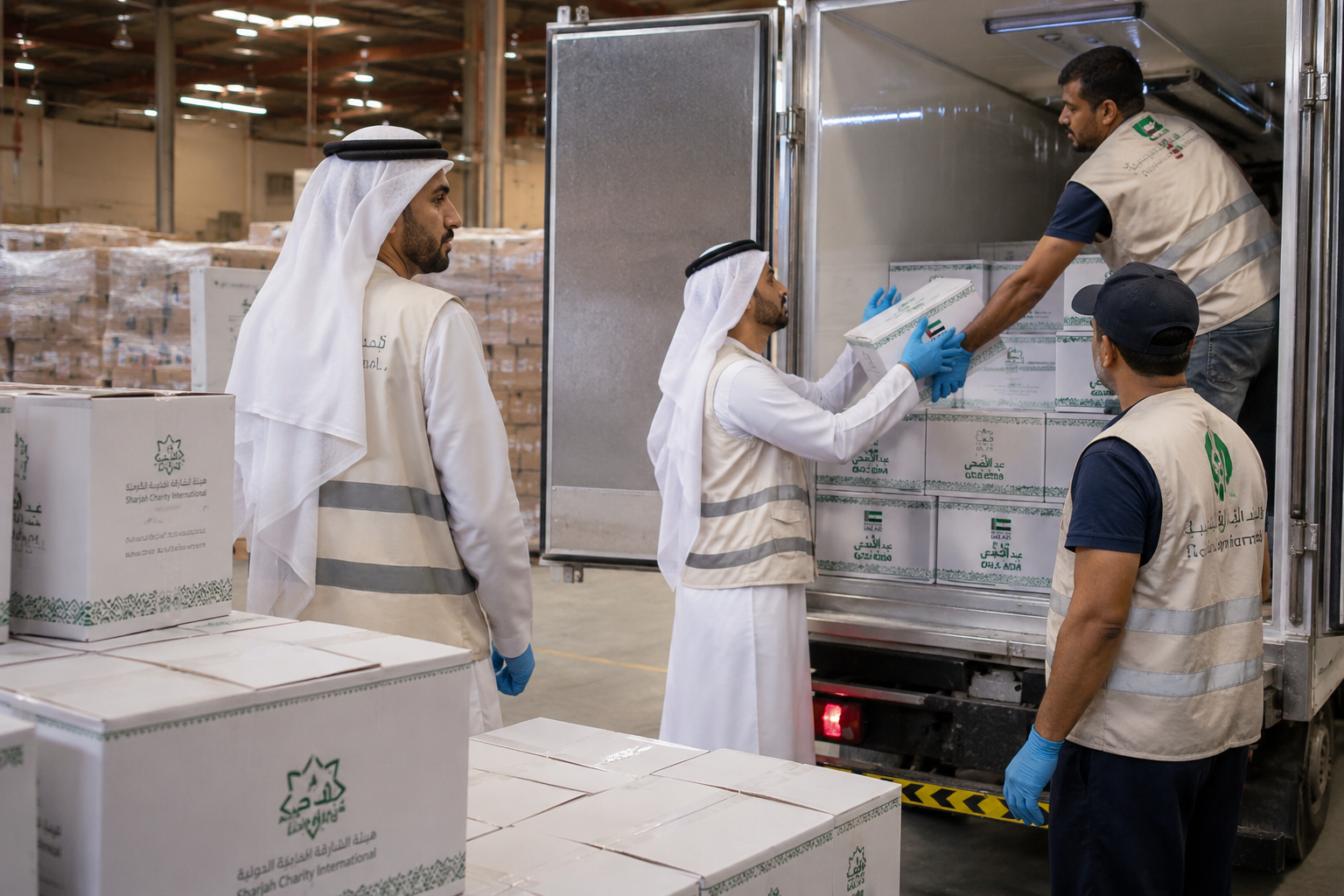
One of the UAE's most significant Eid Al Adha humanitarian operations has wrapped up, with Sharjah Charity International (SCI) completing the distribution of 25,000 sacrificial animals, known as Udhiyah, to an estimated 250,000 people across the UAE and 51 countries worldwide. The scale of this year's campaign reflects both the organization's growing operational capacity and the trust placed in it by thousands of private donors across the Gulf who channel their Eid giving through the charity.
How the UAE Distribution Worked
Within the UAE, SCI allocated 4,000 animals for domestic distribution, processed through its central headquarters in Sharjah and a network of regional branches covering Al Bataeh, Al Madam, Al Dhaid, Kalba, Khor Fakkan, and Dibba Al Hisn. Rather than ad hoc handouts, the charity used registered beneficiary databases to identify and reach pre-vetted families in genuine need. This approach reduces duplication, minimizes waste, and ensures dignity for recipients.
Taking It Global: 51 Countries, 21,000 Animals
The more complex half of the operation was international. SCI distributed 21,000 sacrificial animals across 51 nations, a logistical achievement that required coordinating across multiple time zones, regulatory environments, and cultural contexts, all within the tight window of the Eid Al Adha celebration. To pull this off, SCI worked through three key channels:
The UAE Ministry of Foreign Affairs provided diplomatic support, using UAE embassies and consulates to facilitate regulatory clearances in destination countries. International humanitarian organizations helped pinpoint the highest-need zones, prioritizing communities facing food insecurity. Local field teams on the ground handled last-mile delivery, navigating regional infrastructure challenges that centralized logistics cannot always anticipate.
Rigorous Health and Sharia Compliance
Mohammed Rashid bin Bayat, Vice Chairman of SCI's Board of Directors, emphasized that the Udhiyah project is among the charity's most critical seasonal programs precisely because it has a direct bearing on nutrition and poverty for some of the world's most vulnerable populations. According to bin Bayat, the organization deployed specialized committees and field teams for 24-hour oversight covering every stage from animal procurement and health inspection through slaughter and cold-chain transport. This ensures all operations meet both international food safety standards and the requirements of Islamic jurisprudence (Sharia).
Bin Bayat also acknowledged the growing network of institutional and private donors, noting that their consistent financial support is what makes programs like this sustainable year after year. For organizations and businesses in Dubai looking to engage in structured corporate social responsibility giving, Sharjah Charity International's official website provides information on institutional donor partnerships.