Two days of news from across the UAE and beyond: cybercriminals are targeting summer travellers with scams that look alarmingly real, the government has issued a formal health advisory for three African countries, and Printemps Paris is rolling out its most ambitious GCC hospitality package yet. Here is your complete briefing.
This week delivered a telling mix of stories for UAE residents and international travelers: a cybersecurity warning that every holidaymaker should read before they book anything, a government health advisory that affects anyone with travel plans to East or Central Africa, and a high-end luxury update for GCC visitors heading to Paris this summer. Each story is different, but together they paint a useful picture of what life looks like for well-travelled people based in the UAE right now.
The Travel Scam Threat Is Bigger Than Most People Realise
If you have a summer holiday coming up, this is the most important thing you will read all week. Cybercriminals are running increasingly convincing booking scams that look almost identical to routine travel communications, and the volume is climbing sharply as holiday season kicks in.
Travel expert Juergen Himmelmann of Global Work and Travel has been direct about how much the landscape has changed. What used to be a street vendor selling fake tours has become something far harder to detect, arriving in your inbox as a hotel confirmation, a flight itinerary update, or an urgent payment reminder from a brand you actually recognise and trust.
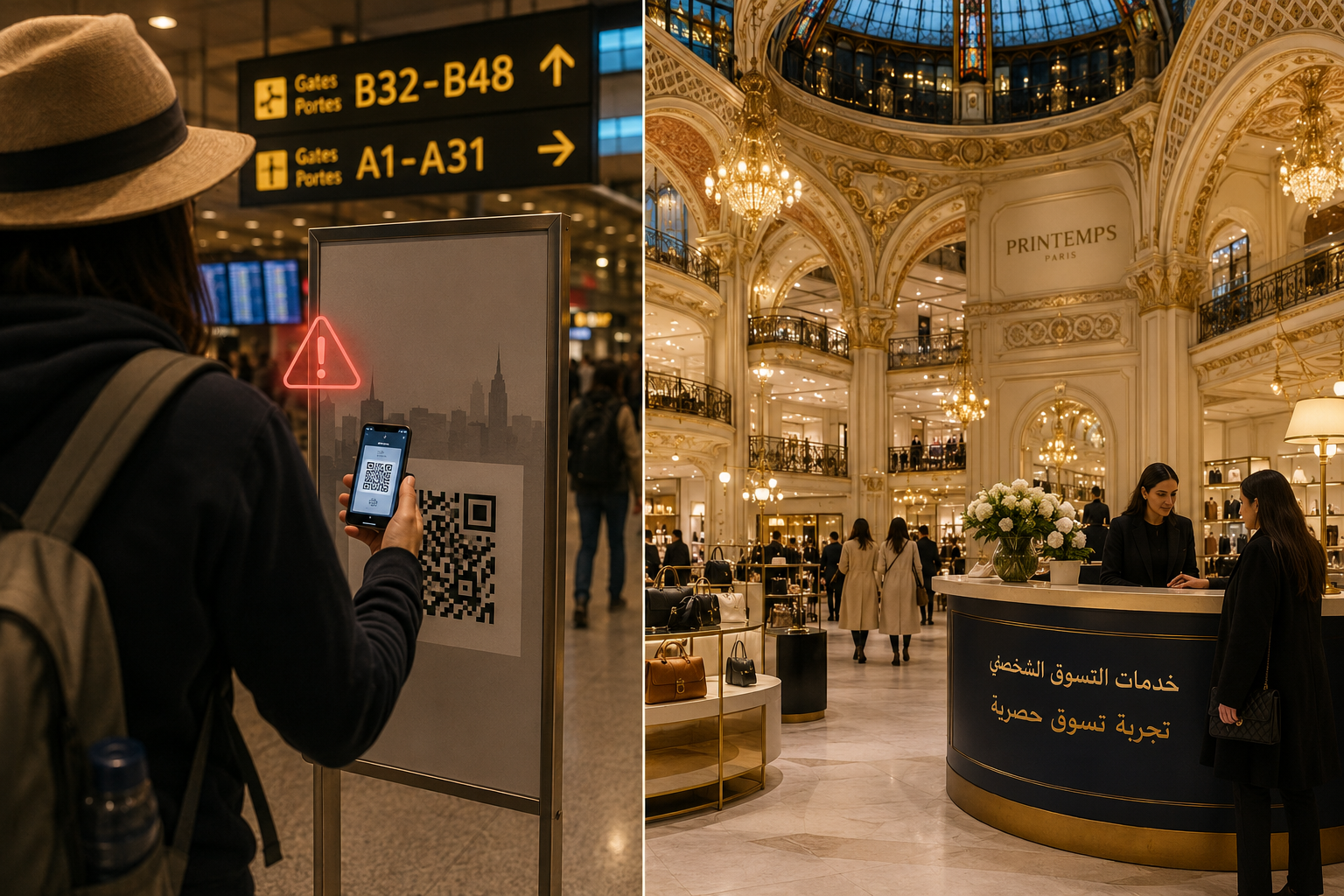
Three specific tactics are dominating reports this season. The first is quishing, where fraudulent QR code stickers are placed over legitimate ones in airports, hotels, and transport hubs, redirecting you to fake payment portals when you scan them. The second is fake booking confirmation emails that perfectly mimic the branding and language of major airlines, hotels, and booking platforms, pushing victims toward counterfeit websites that steal financial information. The third, and arguably the hardest to spot, is reservation hijacking: scammers obtain your actual booking details such as your hotel name, reservation number, and travel dates, then build a payment request around them that looks completely genuine because every detail checks out.
Himmelmann's advice: never act through a link or QR code in an email or public space. Go directly to the official app or website and call the provider to verify any unexpected payment request before you transfer a single dirham.
Beyond digital fraud, traditional distraction tactics are also on the rise in popular tourist destinations. These include friendly chat scams, fake donation requests, and bracelet approaches designed to create confusion before stealing cash or personal items.
→ Related Reading: UAE Fintech and Digital Payments: How the Region Is Rewriting the Rules in 2026
Practical steps to protect yourself before you travel:
- Use a virtual payment card or a prepaid travel card with a spending cap for all holiday transactions
- Never follow payment links in emails or scan QR codes in public spaces to access booking portals
- Always verify unexpected payment requests by calling your hotel or airline directly
- Review your travel insurance policy now: most policies do not cover losses from phishing or voluntary payment fraud
- Access every travel platform through its official app, not through links you were sent
UAE Government Issues Formal Travel Advisory for Three African Countries
On May 31, the UAE Ministry of Foreign Affairs (MoFA) issued an official travel advisory asking all UAE nationals and residents to avoid non-essential travel to Uganda, the Democratic Republic of the Congo, and South Sudan. The advisory is tied to the evolving public health situation related to Ebola virus disease (EVD) in parts of East and Central Africa, which governments worldwide are monitoring closely.
The ministry has been clear that this is not precautionary background noise. It is a formal instruction. UAE nationals currently residing in or visiting any of the three countries are specifically asked to exercise maximum caution, follow all health and safety protocols issued by local authorities, and stay informed through official public health updates.
Of particular note is the ministry's reminder about the Twajudi service, a UAE government platform that allows authorities to locate and assist nationals during emergencies abroad. If you are currently in Uganda, DR Congo, or South Sudan and have not registered, do so immediately. The ministry's emergency hotline for UAE nationals overseas (00971-80024) remains active for anyone who needs consular support.
The advice is simple: avoid non-essential travel to these three countries until further notice, register with Twajudi if you are there now, and follow updates from both the UAE Ministry of Foreign Affairs and the World Health Organization.
→ Related Reading: How the UAE Protects Its Citizens Overseas: Emergency Services, Twajudi, and Consular Support Explained
Printemps Paris Is Betting Big on Middle Eastern Visitors This Summer
On a lighter note, GCC travelers heading to Paris this summer have a compelling reason to put Printemps at the top of their itinerary. The iconic Boulevard Haussmann department store, which has been a fixture of French luxury retail since 1865, has put together its most tailored package yet for Middle Eastern visitors, with a particular push around the Eid Al Adha 2026 season.
The in-store activation runs from May 20 to June 7, 2026, and covers a genuine range of practical and experiential benefits: a 5 percent discount on eligible purchases, a 12 percent tax refund processed immediately in-store, access to private shopping salons, VIP lounge privileges, gourmet dining experiences through a partnership with Lebanese catering specialist Noura, and same-day shopping delivery across Paris.
The detail that stands out most is the personal shopper setup. Printemps has a team of 50 personal shoppers, 15 of whom are Arabic-speaking specialists dedicated to Middle Eastern clientele. Visitors can make contact before arriving in Paris, allowing the team to build out a tailored product selection and arrange private showroom access based on individual preferences. For families or groups travelling together, this kind of preparation makes the difference between a generic luxury experience and a genuinely memorable one.
Romain Bernard, Deputy Director of Business Development at Printemps Paris, has been public about the fact that the Middle East is one of the retailer's most strategically important markets. The store has formalised partnerships with Qatar Airways, VISA GCC, and American Express Saudi Arabia, each of which brings exclusive benefits for regional cardholders and frequent fliers.
Printemps is not treating GCC visitors as a seasonal spike. The Arabic-speaking staff, pre-arrival planning, and embedded regional partnerships point to a long-term commitment to serving Middle Eastern travelers as a primary audience.
→ Related Reading: The GCC Traveler's Guide to Luxury Shopping in Europe: Where the Best Benefits Are in 2026
The Bigger Picture
Three very different stories, but a single thread connects them: the UAE and its residents are increasingly globally mobile, globally visible, and globally targeted. Whether that means fraudsters designing scams around summer booking patterns, governments issuing formal health guidance for countries thousands of kilometers away, or a 160-year-old French department store building an entire service layer around Arabic-speaking shoppers, the message is consistent.
Staying informed, travelling smart, and knowing exactly what protections and benefits you have access to are no longer optional extras. They are the baseline for anyone living and travelling from the UAE today.