Something Is Quietly Changing in Dubai Real Estate
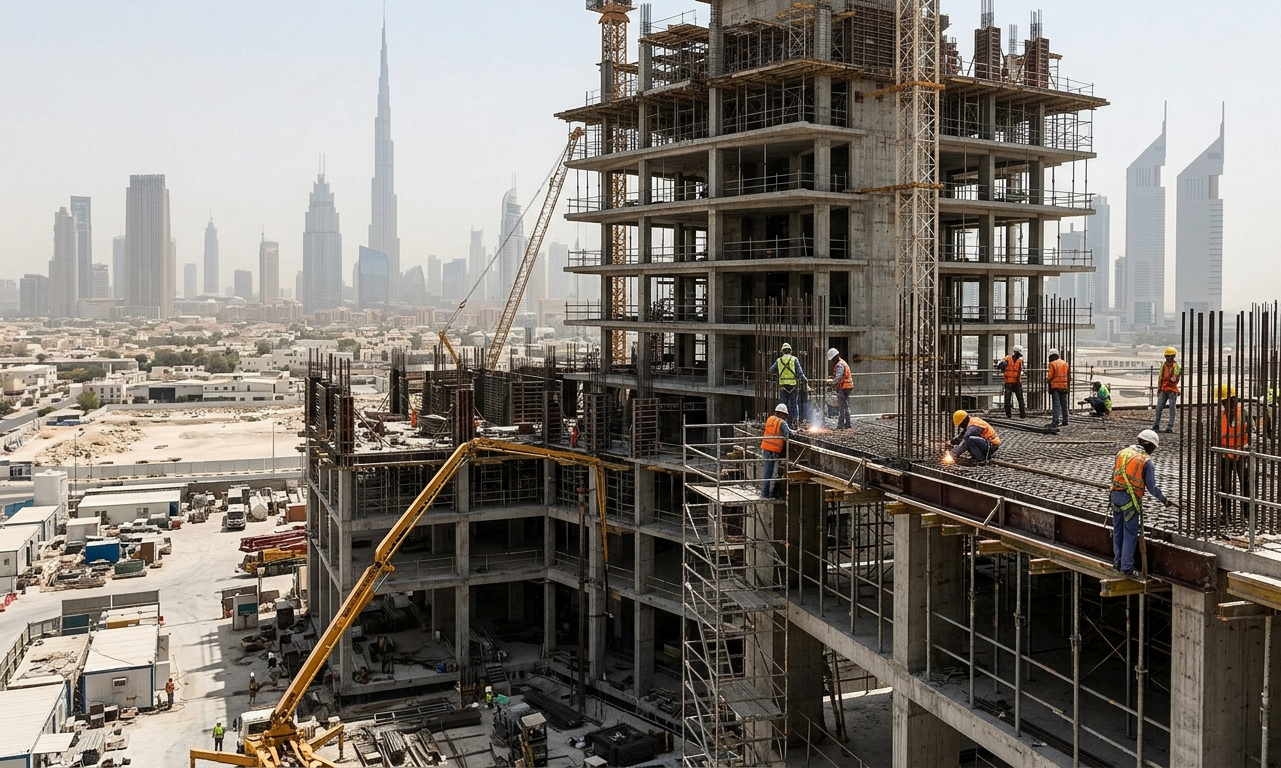
Dubai's property market has had a strong run. Demand from investors, end-users, and international buyers has stayed elevated, project launches have been frequent, and prices in key communities have continued to climb. But there is a cost pressure building in the background that has not made its way into most headlines yet: construction materials are getting significantly more expensive.
According to Gulf News reporting on the topic, key building materials, including steel, aluminium, glass, and electrical systems, have seen price increases of between 12 and 18 percent across major categories in 2026. That is a material shift for any developer trying to hold a project budget together.
For context on how active the construction pipeline is, our coverage of Meraas awarding Dh2.4 billion in Dubailand contracts and Nakheel's Dh3.5 billion Palm Jebel Ali villa contracts gives a sense of how much new development is simultaneously in motion across the emirate right now.
Construction material costs across the UAE have risen an estimated 12 to 18 percent in 2026, covering steel, aluminium, glass, electrical systems, and related building inputs.
Why Costs Are Rising: Three Converging Pressures
The increase is not happening in isolation. Three factors are pushing material costs higher at the same time:
- Global supply chain disruption. Post-pandemic supply chains for construction materials have not fully normalised, and regional conflicts have added freight complexity.
- Higher transportation expenses. Logistics costs have risen sharply over the past 18 months, affecting the landed cost of imported materials that Dubai heavily relies on.
- Demand competition. Dubai is not the only city building at scale. Competition for the same materials from markets across Asia, Europe, and the wider Gulf is pushing prices up globally.
Taken together, these pressures have left developers with meaningfully higher project budgets than they planned for even 12 months ago. The broader economic forces shaping Dubai in 2026 provide a useful backdrop for understanding how this sits within the wider picture.
Many developers are currently insulated by previously negotiated supply contracts. The real pricing test comes when those contracts expire and new project launches hit the market in late 2026 and into 2027.
Can Developers Actually Pass This On to Buyers?
This is the question that matters most for anyone buying, selling, or investing in Dubai property. The answer, right now, is: not easily, and not in full.
Dubai's off-plan market is intensely competitive. Developers are launching projects simultaneously across communities, and buyers have a genuine choice. In that environment, unilaterally raising launch prices because your steel bill went up is a risky move. You price yourself out of a competitive segment, and other developers fill the gap.
Analysts point to several ways this may play out in practice instead:
- Developers absorb part of the increase through tighter margins, particularly larger developers with stronger procurement networks and bulk purchasing agreements
- Project timelines get extended, effectively spreading cost exposure over a longer period
- Specifications on new launches get quietly adjusted, with material grade substitutions that reduce cost without visibly changing the headline product
- Smaller developers without long-term supplier agreements face more acute pressure and may delay launches or exit certain segments
The Dubai real estate category on Dubai Startups Daily tracks the latest project announcements and market movements as they happen.
Where the Pressure Actually Shows Up
The communities most likely to feel price pressure from rising construction costs are the ones with the most new supply entering the market. Premium and high-demand communities, where developers have more pricing power, are better positioned to absorb and pass on cost increases than mid-market segments, where margins were already thinner.
There is also a secondary consideration around the UAE Golden Visa property eligibility rules that changed earlier in 2026. With the removal of the minimum property value threshold for solo investor visas, demand for entry-level and mid-tier properties has broadened. Developers in those segments have even less room to raise prices without losing the buyers that the new visa rules brought in.
Separately, recent deals like the Dh377 million Naia Island beachfront plot sale demonstrate that the ultra-premium segment has its own pricing logic entirely. At that level, material cost fluctuations are a rounding error compared to land value and brand positioning.
The developers most exposed to rising material costs are smaller firms launching new projects in 2026 without long-term supplier contracts in place. Larger developers with established procurement networks are significantly better positioned.
The Longer View: What This Means for Dubai Property Buyers
In the near term, buyers are unlikely to see sharp price jumps driven purely by material costs. The competitive market dynamics work against that. What is more likely is a gradual tightening of developer margins, with some upward drift in launch prices for new projects over the next 12 to 18 months, particularly if material cost pressures continue or intensify.
Buyers in the resale market are less directly affected. The cost pressure hits developers on new projects, not the existing housing stock.
For investors, the more important signal may be about which developers are actually well-positioned to complete their projects on time and on spec in a higher-cost environment. That is a question about operational strength, not just headline pricing. Our UAE startup founder hiring guide for 2026 touches on some of the same operational cost pressures facing businesses scaling in the current environment, which is a relevant context for anyone running a company in the UAE right now.