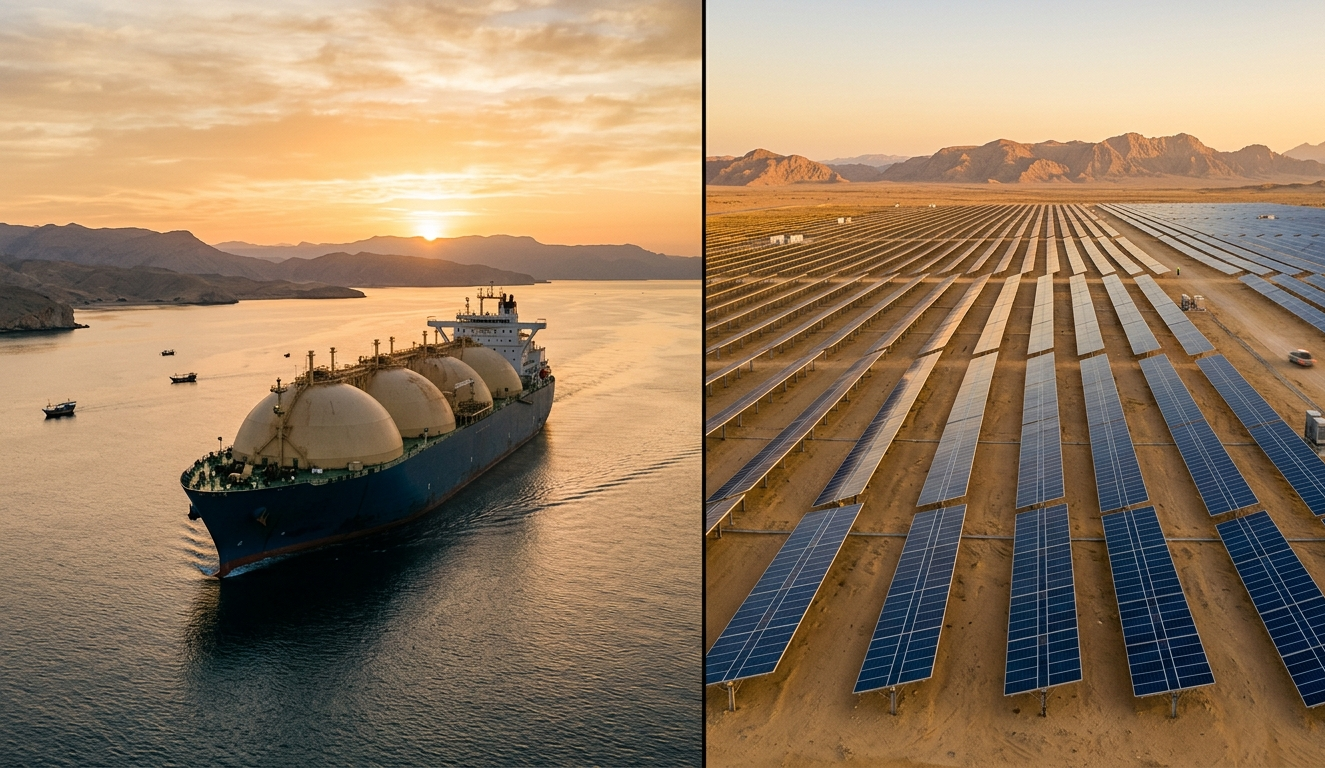
Two energy headlines landed in the same week, and read together they tell a single story about where UAE energy capital is heading. Abu Dhabi-listed ADNOC Logistics & Services, known as ADNOC L&S, has sharply upgraded its 2026 earnings guidance on the back of strong shipping markets. At the same time, new global data shows that clean energy investment worldwide has hit a record 2.16 trillion US dollars, more than double what was spent on fossil fuels, with the UAE positioning itself as a serious player in that shift too. One story is about traditional energy logistics outperforming. The other is about the future of energy investment. Both point to the same underlying strength in the UAE's energy sector.
Read Also
ENOC and Allied Biofuels Sign MoU for Sustainable Aviation Fuel Supply to UAE
ADNOC L&S raises 2026 guidance on shipping strength
ADNOC L&S has raised its full-year 2026 financial guidance after a stronger-than-expected first half, pointing to continued momentum in its shipping business and improving offshore logistics activity as the main drivers. The scale of the upgrade is significant. Revenue guidance has flipped from an expected decline to growth, while profitability targets have jumped well beyond the company's earlier projections for the year.
| Metric | Previous 2026 Guidance | Updated 2026 Guidance |
|---|---|---|
| Revenue | Low-to-mid single-digit decline | Low single-digit growth |
| EBITDA growth | Mid-to-high single-digit growth | High-20 percent range |
| Net profit growth | Mid-to-high teens growth | High-60 percent range |
Management says the revised outlook reflects strong year-to-date trading and an expectation that favourable shipping market conditions will hold through the rest of 2026. ADNOC L&S also flagged improving conditions in its Offshore Contracting business, where the Integrated Logistics Services Platform has handled higher material volumes. The upgrade builds on an already solid first quarter, in which the company reported a 20 percent year-on-year rise in net profit to 222 million US dollars and EBITDA up 7 percent to 368 million US dollars, even as regional shipping faced disruption through the Strait of Hormuz. Capital expenditure plans, leverage targets and dividend policy all remain unchanged, and the company's second-quarter and first-half 2026 results are due on August 11.
Quick Take: ADNOC L&S
- Net profit guidance jumps to a high-60 percent growth range for 2026.
- EBITDA guidance rises to a high-20 percent range.
- Capital expenditure, leverage and dividend policy remain unchanged.
- Second-quarter results due August 11, 2026.
Meanwhile, global clean energy investment hits $2.16 trillion
The same week, the International Energy Agency's World Energy Investment 2026 report confirmed that global investment in clean energy reached 2.16 trillion US dollars in 2025, more than double the 1.01 trillion US dollars invested in fossil fuels. The figures, tracked alongside data from the Abu Dhabi-based International Renewable Energy Agency, point to a structural shift in where the world's energy capital is flowing, even as the Middle East has endured months of heightened regional tension.
| Category | 2025 / 2026 Figure | Context |
|---|---|---|
| Total clean energy investment | $2.16 trillion | More than double fossil fuel investment globally |
| Fossil fuel investment | $1.01 trillion | Oil, natural gas and coal combined |
| Solar power investment | Approximately $365 billion | Largest single recipient of global energy capital |
| Global upstream oil investment | Expected below $500 billion in 2026 | Third consecutive year of decline, per IEA |
China remains the dominant force in the build-out, with its cumulative solar fleet growing from roughly 253 gigawatts at the end of 2020 to about 887 gigawatts by the end of 2024, lifting its share of the world's solar capacity to nearly 48 percent and accounting for about 80 percent of global battery production, according to IRENA data. India has become one of the fastest-growing renewable markets, reaching more than half of its installed electricity capacity from non-fossil sources by April 2026, five years ahead of its original 2030 target.
Where the UAE fits into the clean energy story
The UAE continues to expand its footprint as a regional clean energy investor alongside its strength in conventional energy logistics. Abu Dhabi's Masdar has built a global renewable energy portfolio of 65 gigawatts, with a target of 100 gigawatts by 2030, spanning solar plants, battery storage and green hydrogen projects across more than 40 countries. Recent moves include a 2.2 billion US dollar joint venture with TotalEnergies to consolidate onshore renewable operations across nine countries in Asia, alongside new solar and storage developments in Africa and Central Asia.
Quick Take: Global Clean Energy
- Global clean energy investment hit $2.16 trillion in 2025, more than double fossil fuel spending.
- Solar power alone is projected to attract around $365 billion in investment.
- China and India lead global renewable capacity growth.
- The UAE's Masdar targets 100 gigawatts of renewable capacity by 2030.
Why both stories matter to UAE business
Taken together, ADNOC L&S's earnings strength and the global clean energy investment boom show a UAE energy sector that is performing well on two fronts at once. Conventional energy logistics, shipping and offshore contracting are delivering record profitability, while the country's renewable energy arm continues attracting long-term capital into solar, storage and grid infrastructure. For Dubai-based investors, energy logistics providers and cleantech startups, the takeaway is the same either way: capital keeps flowing into UAE-linked energy businesses, whether the underlying asset is a gas carrier or a solar panel.