Rates Stay Unchanged on Both Sides of the Atlantic
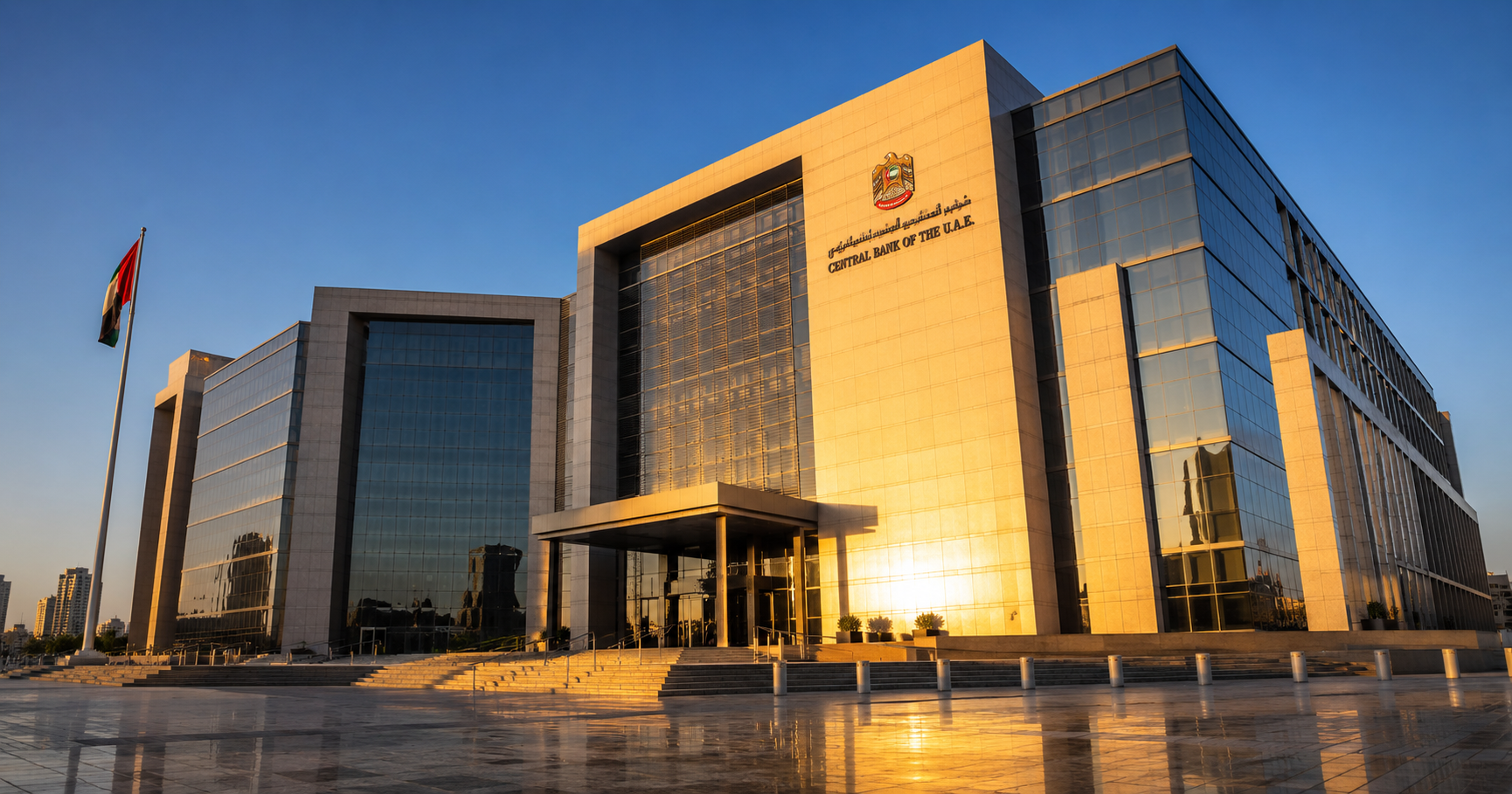
The UAE Central Bank (CBUAE) confirmed on June 18 that it will keep its Base Rate on the Overnight Deposit Facility at 3.65%, effective immediately. The decision came within hours of the US Federal Reserve opting to leave its own benchmark rate in the 3.5% to 3.75% range, citing persistent inflationary pressures and ongoing uncertainty in the global economy.
For anyone watching the UAE monetary policy, the timing is not a coincidence. It rarely is.
Why the UAE Moves With the Fed
The UAE dirham has been pegged to the US dollar since 1997, fixed at 3.6725 dirhams per dollar. That peg does not change. What it does mean, in practical terms, is that the CBUAE has limited room to diverge from Federal Reserve policy without creating pressure on the peg or distorting capital flows.
When the Fed holds, the UAE holds. When the Fed cuts or raises, the CBUAE typically follows within the same announcement cycle. It is a structural feature of the UAE's monetary framework, and it has served the country well in terms of exchange rate stability and investor confidence.
The dirham-dollar peg has been in place for nearly three decades. It anchors business planning for thousands of companies operating in the UAE, from multinationals to local SMEs.
What This Means for Businesses and Borrowers
Stable rates are, on the surface, good news for businesses that need predictability. Companies planning major capital expenditure, property purchases, or working capital facilities in the next few months can proceed on the assumption that lending costs will not change suddenly.
Banks across the UAE set their commercial lending and deposit rates in relation to the CBUAE base rate. With no change at the top, retail and business borrowers can expect their variable-rate loans, mortgages, and revolving credit lines to remain at current levels. That is relevant to a wide range of sectors, particularly real estate, construction, and early-stage startups relying on debt financing.
If you are in the middle of refinancing a business loan or closing on a property, this decision gives you one less variable to worry about for now.
The Fed's Reasoning and What It Signals
The Federal Reserve's statement pointed to inflation that remains above its 2% target and a labour market that, while cooling, has not weakened sharply enough to warrant a rate cut. Fed officials described their stance as "data-dependent," which is central bank language for "we are watching and not ready to commit."
Markets had been pricing in the possibility of a cut later in 2026, but that timeline is now less certain. The Federal Open Market Committee's next scheduled meeting is in late July, and investors will be watching upcoming US inflation reports closely. For context on how these global signals affect Gulf financial markets, the relationship between Fed policy and UAE banking conditions remains the most direct transmission mechanism.
Economic Context in the UAE
The UAE economy has continued expanding in 2026, supported by strong performance in tourism, trade, and financial services. The Dubai International Financial Centre (DIFC) recently reported record company registrations, and non-oil GDP growth remains above regional averages.
Inflation within the UAE has moderated compared to 2022 and 2023 peaks, though housing costs and services inflation have been stickier than goods prices. The CBUAE has been monitoring credit growth in the property sector, particularly given the pace of new development across Dubai and Abu Dhabi.
What to Watch Next
The next inflexion point will likely come from US economic data released over the summer. If inflation continues to ease and employment softens, the Fed could open the door to a September cut. That would, in all probability, be followed by a corresponding move from the CBUAE.
For businesses with significant financial planning decisions on the horizon, particularly those in UAE real estate or expansion-stage startups considering debt funding, the next three to four months could determine whether financing conditions improve. For now, the holding pattern continues.